Best Ultrawide Monitors with G-Sync in 2026: 15 Picks Ranked by Specs
As an Amazon Associate we earn from qualifying purchases. Links on this page are affiliate links.
Finding the best ultrawide monitors with G-SYNC requires balancing panel speed, resolution, and variable refresh rate support. We evaluated 15 models based on the specifications published on their listings to rank the top options for your desk.
The AOC 27-Inch 240Hz QHD IPS Gaming Monitor leads the list by combining a 240Hz refresh rate and 1440p resolution with certified G-Sync variable refresh operation. This guide helps you decide which display size, panel type, and refresh rate match your hardware and gaming priorities.
Quick picks
The best fit for you
- You want high refresh rates for competitive 1440p gaming AOC 27-Inch 240Hz QHD IPS Gaming Monitor The 27-inch IPS display pairs a 240Hz refresh rate with 1440p resolution and G-Sync support.
- You want an ultrawide screen with deep contrast AOC 34-Inch Curved QD-OLED Gaming Monitor The 34-inch QD-OLED ultrawide panel provides G-Sync support alongside deep black levels.
- You need a compact monitor for smaller desks KTC 24-Inch Fast IPS 144Hz Gaming Monitor Its compact 24-inch 1080p IPS screen provides a 144Hz refresh rate with G-Sync compatibility.
- You want sharp 4K resolution on an OLED panel ASUS 32-Inch 4K Dual-Mode OLED Monitor The 32-inch OLED panel combines 4K UHD resolution, a 240Hz refresh rate, and G-Sync support.
Our 15 picks

AOC 27-Inch 240Hz QHD IPS Gaming Monitor
Best for: competitive 1440p gaming with NVIDIA G-Sync
- Sync Technology
- G-SYNC (what this guide is about)
- Screen Size
- 27"
- Resolution
- 2560x1440
- Refresh Rate
- 240Hz (260Hz Overclocked)
- Panel Type
- IPS
- Response Time
- 0.3ms MPRT
This AOC monitor pairs a 27-inch QHD 2560x1440 IPS panel with NVIDIA G-Sync and Adaptive-Sync support. It delivers a 240Hz base refresh rate overclockable to 260Hz, alongside a 0.3ms MPRT response time. You get DisplayPort 1.4 and two HDMI 2.0 inputs. It suits you if you want high-frame-rate 1440p gaming with tear-free variable refresh rates on NVIDIA hardware without requiring an ultrawide desk footprint.
Pros
- 240Hz base refresh rate with 260Hz overclocking
- NVIDIA G-Sync and Adaptive-Sync variable refresh support
- Fast 0.3ms MPRT response time on an IPS panel
- 2560x1440 resolution with 300-nit brightness
Cons
- Standard 16:9 aspect ratio rather than a 21:9 ultrawide format
- Stand adjustment is limited to tilt only
- HDMI connectivity is restricted to HDMI 2.0 bandwidth
Good fit if
- You use an NVIDIA graphics card and want refresh rates up to 260Hz.
- You prefer a 27-inch 16:9 QHD display size for your desk space.
- You want low-motion-blur gaming via a 0.3ms MPRT panel.
Skip if
- You require an ultrawide 21:9 aspect ratio for wider peripheral vision.
- You need height adjustment, swivel, or pivot functions on the stand.
Verdict: AOC 27-Inch 260Hz QHD IPS Monitor delivers high refresh rates and certified G-Sync variable refresh operation. It provides sharp 1440p clarity and fast pixel response for setups that do not need an ultrawide profile.

LG UltraGear 27-Inch OLED Gaming Monitor
Best for: Fast-paced competitive gaming with OLED contrast
- Sync Technology
- FreeSync, G-SYNC (what this guide is about)
- Screen Size
- 27-inch
- Resolution
- QHD 1440p
- Refresh Rate
- 240Hz
- Panel Type
- OLED
- Response Time
- 0.03ms (GtG)
The LG 27-Inch 240Hz OLED Gaming Monitor delivers high-speed OLED performance with official NVIDIA G-SYNC compatibility. You get a QHD 1440p resolution, a 240Hz refresh rate, and a 0.03ms gray-to-gray response time. Its 1,500,000:1 contrast ratio provides deep black levels via VESA DisplayHDR True Black 400. This screen suits you if you want ultra-fast response times and tear-free motion for fast-paced gaming.
Pros
- 0.03ms GtG response time eliminates ghosting
- 240Hz refresh rate with official NVIDIA G-SYNC compatibility
- OLED panel delivers a 1,500,000:1 contrast ratio
- Both HDMI 2.1 and DisplayPort 1.4 support 240Hz operation
Cons
- Standard 27-inch screen size lacks ultrawide horizontal space
- 1440p resolution provides lower detail than 4K displays
Good fit if
- You want instantaneous 0.03ms response times and deep OLED black levels.
- You need 240Hz refresh rates using either HDMI 2.1 or DisplayPort 1.4.
- You run an NVIDIA graphics card and require certified G-SYNC support.
Skip if
- You want a panoramic ultrawide aspect ratio instead of a 27-inch screen.
- You require 4K resolution for fine productivity or media work.
Verdict: LG 27-Inch 240Hz OLED Gaming Monitor pairs an ultra-fast 0.03ms response time with official G-SYNC support on an OLED panel. It delivers fluid motion and deep contrast, though its 27-inch format lacks ultrawide width.
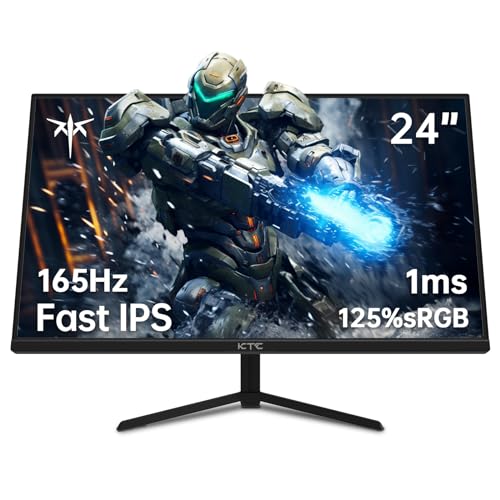
KTC 24-Inch Fast IPS 144Hz Gaming Monitor
Best for: compact 1080p high-refresh G-Sync gaming
- Sync Technology
- FreeSync, G-SYNC (what this guide is about)
- Screen Size
- 24"
- Resolution
- 1080p
- Refresh Rate
- 165Hz
- Panel Type
- Fast IPS
- Response Time
- 1ms MPRT
This KTC display is a 24-inch gaming monitor with a 1080p Fast IPS panel and a 165Hz refresh rate. It includes G-Sync and FreeSync Premium compatibility to reduce screen tearing during fast gameplay. With four display inputs and a 1ms MPRT response time, you get responsive performance for competitive titles. It suits you if you need a compact high-refresh screen with variable refresh rate support for your setup.
Pros
- 165Hz refresh rate with 1ms MPRT response time
- G-Sync and FreeSync Premium adaptive sync support
- Four video inputs with two HDMI 2.0 and two DisplayPort 1.4 ports
- 125.25% sRGB color gamut coverage
Cons
- Native 1080p resolution offers less screen space than 1440p
- Standard 16:9 aspect ratio instead of an ultrawide format
Good fit if
- You want a 165Hz refresh rate with G-Sync support on a 1080p display.
- You need multiple video connections to hook up PCs and consoles simultaneously.
Skip if
- You want an ultrawide screen with a 21:9 aspect ratio.
- You prefer a sharper 1440p or 4K resolution.
Verdict: KTC 24-Inch 165Hz Fast IPS Monitor delivers fluid 165Hz motion and G-Sync support across four display inputs. It serves well as a compact 1080p display for high-frame-rate gaming.

AOC 34-Inch Curved QD-OLED Gaming Monitor
Best for: high-contrast 34-inch ultrawide PC gaming
- Sync Technology
- G-SYNC (what this guide is about)
- Screen Size
- 34"
- Resolution
- 3440x1440
- Refresh Rate
- 175Hz
- Panel Type
- QD OLED
- Aspect Ratio
- 21:9
This 34-inch ultrawide monitor pairs a curved QD-OLED panel with an ultra-wide 21:9 aspect ratio and 3440x1440 resolution. It features a 175Hz refresh rate, 0.03ms GtG response time, and NVIDIA G-SYNC compatibility for tear-free frame pacing. Certified with HDR400 True Black, it delivers deep contrast alongside standard ergonomic adjustments. It suits you if you want a dedicated ultrawide gaming display with instantaneous pixel transitions.
Pros
- 3440x1440 curved QD-OLED panel with HDR400 True Black
- Rapid 0.03ms GtG response time and 175Hz refresh rate
- NVIDIA G-SYNC compatible for smooth frame pacing
- Ergonomic stand with height, tilt, swivel, and VESA mount support
Cons
- Heavy total weight at 32.1 pounds
- Caps at 175Hz refresh rate unlike higher-frequency alternatives
- No pivot adjustment included on the stand
Good fit if
- You want a 34-inch 21:9 curved QD-OLED panel with deep contrast levels.
- You prioritize rapid 0.03ms response times and NVIDIA G-SYNC frame synchronization.
- You need standard height, tilt, and swivel ergonomic adjustments on your desk.
Skip if
- You require refresh rates higher than 175Hz for competitive titles.
- You need a lightweight monitor setup that weighs under 30 pounds.
Verdict: AOC 34-Inch QD-OLED Curved Gaming Monitor combines a 3440x1440 ultrawide panel with 175Hz G-SYNC support for fluid, high-contrast motion. It is an ideal 34-inch choice if you prioritize 0.03ms response times and deep black levels.

Alienware 27-Inch 240Hz Gaming Monitor
Best for: high-refresh competitive 1440p gaming
- Sync Technology
- G-SYNC (what this guide is about)
- Screen Size
- 27-inch
- Resolution
- 2560 x 1440
- Refresh Rate
- 240Hz
- Panel Type
- Fast IPS
- Aspect Ratio
- 16:9
This 27-inch gaming display pairs a 2560 x 1440 Fast IPS panel with NVIDIA G-SYNC and VESA Adaptive Sync support. You get a native 240Hz refresh rate that overclocks to 280Hz, along with a 1ms gray-to-gray response time. With 95% DCI-P3 coverage and DisplayHDR 600 certification, it suits you if you want high-speed frame delivery without sacrificing color range for competitive and daily play.
Pros
- Overclocked refresh rate up to 280Hz (240Hz native)
- Fast IPS panel with 1ms GtG response time
- NVIDIA G-SYNC Compatible and VESA Adaptive Sync certified
- VESA DisplayHDR 600 with 95% DCI-P3 color coverage
- Fully adjustable stand with swivel, pivot, tilt, and height options
Cons
- Standard 16:9 aspect ratio instead of ultrawide
- Relatively heavy at 19.6 pounds
- Lists only DisplayPort 1.4 connectivity
Good fit if
- You need refresh rates reaching up to 280Hz for fast-paced gaming.
- You want certified NVIDIA G-SYNC performance on a 1440p panel.
- You require full ergonomic adjustments including height, tilt, swivel, and pivot.
Skip if
- You specifically want an ultrawide 21:9 or curved screen.
- You need a lightweight display for low-capacity mounting arms.
Verdict: Alienware 27-inch 280Hz Fast IPS Gaming Monitor delivers fluid motion and rapid frame rates backed by certified G-SYNC tear prevention. It is a capable choice if you prioritize competitive speed on a 1440p flat display.

ASUS 32-Inch 4K Dual-Mode OLED Monitor
Best for: hybrid high-resolution and ultra-high-refresh gaming
- Sync Technology
- G-SYNC (what this guide is about)
- Screen Size
- 32"
- Resolution
- 3840 x 2160
- Refresh Rate
- 240Hz
- Panel Type
- WOLED
- Connectivity
- USB-C
This 32-inch gaming monitor features a 4K WOLED panel paired with G-Sync compatibility for tear-free frames. Its dual-mode function allows you to switch between sharp 4K resolution at 240Hz and high-speed Full HD at 480Hz. It includes USB-C connectivity and a custom passive heatsink. You will find it well suited if you demand both ultra-high visual clarity for detailed titles and maximum frame rates for competitive gaming.
Pros
- Dual-mode display supports 4K at 240Hz or Full HD at 480Hz
- WOLED panel delivers true blacks with uniform brightness option
- G-Sync compatibility paired with OLED anti-flicker technology
- Integrated USB-C port and passive heatsink cooling
Cons
- Standard 16:9 aspect ratio rather than an ultrawide canvas
- Achieving the 480Hz refresh rate requires dropping resolution to 1080p
Good fit if
- You want to alternate between native 4K visuals and 480Hz competitive speeds.
- You need G-Sync support on an OLED panel with burn-in warranty coverage.
- You plan to connect peripherals or display inputs using USB-C.
Skip if
- You require an ultrawide 21:9 aspect ratio.
- You want 480Hz refresh rates without downscaling from 4K resolution.
Verdict: ASUS ROG 32-Inch Dual-Mode 4K OLED Gaming Monitor delivers exceptional versatility by combining a sharp 4K 240Hz screen with an ultra-fast 480Hz Full HD mode. Its OLED panel and G-Sync compatibility provide fluid motion across multiple genres.

Alienware 27-Inch 4K Dual-Resolution Gaming Monitor
Best for: switching between 4K fidelity and 360Hz speed
- Sync Technology
- G-SYNC (what this guide is about)
- Screen Size
- 27"
- Resolution
- 3840x2160, 1920x1080
- Refresh Rate
- 180Hz, 360Hz
- Panel Type
- IPS
- Response Time
- 0.5ms GTG, 1ms GTG
View on Amazon: Alienware 27-Inch 4K Dual-Resolution Gaming Monitor
This 27-inch IPS display features a dual-resolution system that runs native 4K at up to 180Hz or switches to native Full HD at 360Hz. It includes NVIDIA G-SYNC Compatible support and VESA DisplayHDR 600 certification with Dolby Vision. You get calibrated color performance with 95% DCI-P3 coverage and Delta E<2 accuracy. It suits you if you want both sharp detail for visuals and ultra-high frame rates for competitive games.
Pros
- Dual-mode operation: native 4K at 180Hz and FHD at 360Hz
- NVIDIA G-SYNC Compatible and VESA AdaptiveSync certification
- Dolby Vision and VESA DisplayHDR 600 support
- 95% DCI-P3 color coverage with factory Delta E<2 calibration
Cons
- Standard 27-inch 16:9 aspect ratio rather than ultrawide
- Top refresh rates of 180Hz and 360Hz require overclocking from 165Hz and 330Hz native
Good fit if
- You want to toggle between 4K visual clarity and 360Hz competitive speeds.
- You use NVIDIA G-SYNC Compatible variable refresh rate technology.
- You need factory-calibrated color accuracy with Delta E<2.
Skip if
- You want a 21:9 ultrawide aspect ratio screen.
- You prefer an OLED panel over an IPS panel.
Verdict: Alienware 27-Inch Dual-Resolution Gaming Monitor offers distinct 4K 180Hz and FHD 360Hz modes on an IPS panel. NVIDIA G-SYNC Compatible certification and DisplayHDR 600 deliver smooth, flexible output for detail-focused or high-frame-rate titles.

KTC 27-Inch 1440p IPS Gaming Monitor
Best for: 1440p high-refresh gaming with full ergonomic adjustability
- Sync Technology
- FreeSync, G-SYNC (what this guide is about)
- Screen Size
- 27"
- Resolution
- 2560 x 1440
- Refresh Rate
- 170Hz
- Panel Type
- Fast IPS
- Response Time
- 1ms GTG
This KTC display is a 27-inch gaming monitor with a 2560 x 1440 resolution and a Fast IPS panel. It features G-Sync Compatible support alongside AMD FreeSync Premium to prevent screen tearing during fast gameplay. With a 170Hz refresh rate and a 1ms GTG response time, motion remains clear. It suits you if you need a responsive QHD screen with an ergonomic stand that pivots into portrait mode.
Pros
- 170Hz refresh rate with 1ms GTG response time
- G-Sync Compatible and FreeSync Premium variable refresh rate support
- Ergonomic stand with height adjustment, tilt, swivel, and pivot
- Wide color coverage with 131% sRGB and 97% DCI-P3
Cons
- Standard 16:9 aspect ratio instead of an ultrawide format
- Uses DisplayPort 1.2 and HDMI 2.0 instead of newer connection standards
- Color depth is limited to 8-bit showing 16.7 million colors
Good fit if
- You want a 1440p Fast IPS panel with G-Sync compatibility.
- You need a fully adjustable stand that rotates into portrait orientation.
- You want broad color gamut coverage reaching 97% DCI-P3.
Skip if
- You want a genuine 21:9 ultrawide aspect ratio.
- You require modern DisplayPort 1.4 or HDMI 2.1 connections.
- You need a 10-bit color panel for professional production.
Verdict: KTC 27-Inch 170Hz Fast IPS Gaming Monitor delivers reliable G-Sync compatibility, sharp 1440p resolution, and versatile stand ergonomics for competitive play. Its older video port revisions are balanced by swift 1ms response times and strong DCI-P3 coverage.

ASUS 32-Inch 4K QD-OLED Gaming Monitor
Best for: high-refresh 4K QD-OLED gaming setups
- Sync Technology
- G-SYNC (what this guide is about)
- Screen Size
- 32-inch
- Resolution
- 3840 x 2160
- Refresh Rate
- 240 Hz
- Panel Type
- QD-OLED
- Response Time
- 0.03 ms GTG
This 32-inch display pairs a 4K UHD QD-OLED panel with a 240Hz refresh rate and G-SYNC Compatible support. It delivers a 0.03 ms response time alongside 99% DCI-P3 color coverage and VESA DisplayHDR 400 True Black compliance. A built-in USB-C port supplies 90W power delivery for single-cable laptop setups. It suits you if you want ultra-fast response times and high-density 4K visuals for tear-free gaming.
Pros
- 240Hz refresh rate with 0.03 ms GTG response time
- 4K UHD (3840 x 2160) QD-OLED panel
- G-SYNC Compatible support for tear-free output
- USB-C connectivity with 90W power delivery
- VESA DisplayHDR 400 True Black and 99% DCI-P3 gamut
Cons
- Standard 16:9 aspect ratio rather than ultrawide 21:9 format
- Heavier build at 19.4 pounds
Good fit if
- You want 4K resolution at a 240Hz refresh rate.
- You need single-cable USB-C connectivity with 90W charging.
- You prioritize 0.03 ms response times for fast-paced titles.
Skip if
- You want an ultrawide 21:9 curved format.
- You need a lightweight panel for lower-capacity monitor arms.
Verdict: ASUS 32-Inch 4K QD-OLED Gaming Monitor delivers sharp 4K resolution and fluid 240Hz motion backed by G-SYNC Compatible support. It provides exceptional color coverage, 90W USB-C connectivity, and instantaneous 0.03 ms response times.

ASUS TUF 27-Inch 1440p 170Hz IPS Gaming Monitor
Best for: fast 1440p G-SYNC gaming setups
- Sync Technology
- G-SYNC (what this guide is about)
- Screen Size
- 27"
- Resolution
- 2560 x 1440
- Refresh Rate
- 170Hz
- Panel Type
- IPS
- Response Time
- 1ms
View on Amazon: ASUS TUF 27-Inch 1440p 170Hz IPS Gaming Monitor
This ASUS TUF display is a 27-inch gaming monitor with a 2560 x 1440 IPS panel. It features a 170Hz refresh rate, a 1ms response time, and G-SYNC Compatible variable refresh rate support to prevent screen tearing. With dual HDMI 2.0 ports and a DisplayPort 1.2 connection, it suits you if you want crisp 1440p visuals with fluid motion for fast-paced action.
Pros
- 170Hz refresh rate with 1ms response time
- 2560 x 1440 resolution on an IPS panel
- G-SYNC Compatible variable refresh rate support
- DisplayPort 1.2 and two HDMI 2.0 ports
Cons
- Stand includes tilt and swivel without height adjustment
- Uses DisplayPort 1.2 and HDMI 2.0 rather than newer interface standards
Good fit if
- You play fast-paced games requiring up to a 170Hz refresh rate.
- You need a 1440p IPS display with G-SYNC tear prevention.
- You want multiple display inputs across HDMI and DisplayPort.
Skip if
- You require a stand with integrated height adjustment.
- You need newer HDMI 2.1 or DisplayPort 1.4 connections.
Verdict: ASUS TUF 27-Inch 1440p 170Hz Gaming Monitor delivers sharp 1440p IPS visuals and smooth motion through its 170Hz refresh rate and G-SYNC Compatible variable refresh rate. It is a solid choice for desktop setups that do not require built-in height adjustability.

ASUS TUF 27-Inch 180Hz Gaming Monitor
Best for: High-refresh 1080p G-Sync gaming
- Sync Technology
- FreeSync, G-SYNC (what this guide is about)
- Screen Size
- 27”
- Resolution
- 1920 x 1080
- Refresh Rate
- 180Hz
- Panel Type
- Fast IPS
- Response Time
- 1ms (GTG)
This display is a 27-inch Fast IPS gaming monitor built with a 1920 x 1080 resolution and a 180Hz refresh rate. It includes G-SYNC compatible and FreeSync Premium support alongside a 1ms gray-to-gray response time for smooth variable refresh rate gaming. You get DisplayPort 1.4 and two HDMI 2.0 ports. It suits you if you prioritize higher frame rates at Full HD over higher display pixel density.
Pros
- 180Hz refresh rate with 1ms GTG response time
- G-SYNC compatible and FreeSync Premium support
- Fast IPS panel technology
- Extreme Low Motion Blur and Shadow Boost features
Cons
- 1080p resolution provides lower pixel density at 27 inches
- HDMI connectivity limited to version 2.0
Good fit if
- You want high-refresh 1080p gaming performance.
- You need G-SYNC compatible and FreeSync Premium variable refresh rates.
Skip if
- You prefer 1440p or 4K resolution on a 27-inch screen.
- You require HDMI 2.1 video inputs.
Verdict: ASUS TUF Gaming 27-Inch 180Hz Monitor pairs a 180Hz Fast IPS panel with G-SYNC compatibility for tear-free 1080p play. It is a practical option if your priority is high frame rates over fine pixel detail.

ASUS ROG 27-Inch 1440p 180Hz Gaming Monitor
Best for: USB-C setups needing 1440p 180Hz G-Sync
- Sync Technology
- G-SYNC (what this guide is about)
- Screen Size
- 27-inch
- Resolution
- 2560 x 1440
- Refresh Rate
- 180Hz
- Panel Type
- Fast IPS
- Response Time
- 1ms GTG
This ASUS ROG 27-inch monitor provides a 2560 x 1440 Fast IPS panel with a 180Hz refresh rate and a 1ms response time. You get G-SYNC compatibility alongside ELMB SYNC to reduce motion blur and screen tearing. Its USB Type-C port supports DisplayPort video and connects peripherals through an integrated hub. It suits you if you want a high-refresh 1440p display that links your gaming setup and peripherals with one cable.
Pros
- 180Hz refresh rate and 1ms GTG response time on a Fast IPS panel
- USB Type-C port with DisplayPort video support and hub functionality
- ELMB SYNC pairs variable refresh rate with motion blur reduction
- DisplayWidget Center lets you manage OSD settings using a mouse
Cons
- Standard 16:9 screen ratio rather than a 21:9 ultrawide form factor
- No HDMI inputs listed in specifications
Good fit if
- You need a USB Type-C connection for DisplayPort video and peripheral hub use.
- You want a 1440p Fast IPS display running at 180Hz with G-SYNC.
- You prefer adjusting monitor settings directly with your mouse.
Skip if
- You require an ultrawide 21:9 display canvas.
- You depend on standard HDMI ports for your gaming devices.
Verdict: ASUS ROG 27-Inch 1440p USB-C Gaming Monitor delivers 180Hz G-SYNC gameplay and streamlined cable routing through its DisplayPort-enabled USB-C hub. It offers a fast, practical 1440p IPS option for single-cable desk arrangements.

LG 27-Inch QHD 144Hz IPS Monitor
Best for: standard 1440p G-Sync compatible gaming setups
- Sync Technology
- FreeSync, G-SYNC (what this guide is about)
- Screen Size
- 27-Inch
- Resolution
- 2560 x 1440
- Refresh Rate
- 144Hz
- Panel Type
- IPS
- Response Time
- 1ms (GtG)
The LG 27-Inch QHD 144Hz IPS Gaming Monitor pairs a 2560 x 1440 resolution with certified NVIDIA G-Sync and FreeSync Premium support. Its 144Hz refresh rate and 1ms GtG response time ensure fluid frame delivery without screen tearing. You get 99% sRGB coverage on an IPS panel alongside height, tilt, and pivot stand adjustments. This display suits you if you need a reliable 1440p gaming setup with certified variable refresh rate performance.
Pros
- Official NVIDIA G-Sync Compatible and FreeSync Premium support
- 144Hz refresh rate with 1ms GtG response time
- IPS panel with up to 99% sRGB color coverage
- Ergonomic stand with tilt, height, and pivot adjustments
Cons
- Refresh rate tops out at 144Hz
- Standard 2560 x 1440 resolution rather than an ultrawide aspect ratio
- No built-in speakers or USB hub listed in the specifications
Good fit if
- You want verified NVIDIA G-Sync Compatible performance to prevent screen tearing.
- You prefer an IPS panel with 99% sRGB coverage at 1440p resolution.
- You need an adjustable stand with height, tilt, and pivot functionality.
Skip if
- You want an ultrawide aspect ratio rather than a standard 16:9 screen.
- You require refresh rates above 144Hz for fast competitive titles.
- You need integrated speakers or USB pass-through ports.
Verdict: LG 27-Inch QHD 144Hz IPS Gaming Monitor delivers verified G-Sync compatibility and responsive 1ms IPS visuals for standard 1440p gaming. It provides solid tear-free performance with complete ergonomic stand adjustability.

LG UltraGear 27-Inch 180Hz QHD Monitor
Best for: Fast 1440p gaming with full stand adjustment
- Sync Technology
- FreeSync, G-SYNC (what this guide is about)
- Screen Size
- 27"
- Resolution
- 2560x1440
- Refresh Rate
- 180Hz (O/C 200Hz)
- Panel Type
- IPS
- Response Time
- 1ms GtG
This 27-inch LG UltraGear display pairs a 2560x1440 QHD resolution with an IPS panel and native NVIDIA G-SYNC Compatible and AMD FreeSync support. You get a base 180Hz refresh rate that overclocks up to 200Hz, alongside a 1ms GtG response time. The included stand adjusts for height, tilt, and pivot. It suits you if you need fast tear-free frame rates and flexible ergonomics for competitive 1440p gaming sessions.
Pros
- Overclockable refresh rate up to 200Hz
- NVIDIA G-SYNC Compatible and AMD FreeSync support
- 1ms GtG response time on an IPS panel
- Height, tilt, and pivot adjustable stand
Cons
- Standard 16:9 aspect ratio instead of an ultrawide format
- Connectivity limited to HDMI and DisplayPort with no USB hub
Good fit if
- You want a 2560x1440 IPS screen that reaches up to 200Hz.
- You need certified NVIDIA G-SYNC Compatible and AMD FreeSync support.
- You want a stand with height, tilt, and pivot adjustability.
Skip if
- You want an ultrawide or curved gaming display.
- You need USB-C video input or extra USB ports.
Verdict: LG UltraGear 27-Inch 200Hz QHD IPS Monitor provides fluid 1440p gameplay with its 200Hz overclock and certified G-SYNC Compatibility. It delivers responsive IPS performance with full stand adjustability for everyday competitive play.

KOORUI 27-Inch 240Hz Gaming Monitor
Best for: competitive 1080p gaming at high refresh rates
- Sync Technology
- FreeSync, G-SYNC (what this guide is about)
- Screen Size
- 27"
- Resolution
- 1920x1080
- Refresh Rate
- 240Hz
- Response Time
- 1ms
- Connectivity
- DisplayPort 1.4, HDMI 2.0
The KOORUI 27-Inch 240Hz Gaming Monitor pairs a 1920x1080 Full HD resolution with a 240Hz refresh rate and G-SYNC Compatible support. You get a fast 1ms response time, 95% DCI-P3 color coverage, and DisplayPort 1.4 and HDMI 2.0 inputs. This display suits you if you prioritize high frame rates and variable refresh rate synchronization for fast-paced games over higher pixel density.
Pros
- 240Hz refresh rate and 1ms response time
- G-SYNC Compatible and FreeSync Premium support
- Wide color coverage with 95% DCI-P3 and 100% sRGB
- DisplayPort 1.4, HDMI 2.0, and 3.5mm audio connectivity
Cons
- 1080p resolution provides lower pixel density on a 27-inch panel
- Stand adjustment is limited to tilt with no height or swivel support
Good fit if
- You want a 240Hz refresh rate for competitive gaming with G-SYNC support.
- You prefer 1080p resolution to maximize frame rates on your hardware.
- You plan to mount the monitor using a 75x75mm VESA bracket.
Skip if
- You need 1440p or 4K resolution on a 27-inch display for sharper detail.
- You require height or swivel adjustments from the included factory stand.
Verdict: KOORUI 27-Inch 240Hz Gaming Monitor delivers high-speed 240Hz performance and G-SYNC compatibility for fast gaming at 1080p. Its ergonomic adjustments remain limited to tilt, making a VESA mount useful if you need full positioning flexibility.
Specifications side by side
| Spec | AOC 27-Inch 240Hz QHD IPS Gaming Monitor | LG UltraGear 27-Inch OLED Gaming Monitor | KTC 24-Inch Fast IPS 144Hz Gaming Monitor | AOC 34-Inch Curved QD-OLED Gaming Monitor | Alienware 27-Inch 240Hz Gaming Monitor | ASUS 32-Inch 4K Dual-Mode OLED Monitor | Alienware 27-Inch 4K Dual-Resolution Gaming Monitor | KTC 27-Inch 1440p IPS Gaming Monitor | ASUS 32-Inch 4K QD-OLED Gaming Monitor | ASUS TUF 27-Inch 1440p 170Hz IPS Gaming Monitor | ASUS TUF 27-Inch 180Hz Gaming Monitor | ASUS ROG 27-Inch 1440p 180Hz Gaming Monitor | LG 27-Inch QHD 144Hz IPS Monitor | LG UltraGear 27-Inch 180Hz QHD Monitor | KOORUI 27-Inch 240Hz Gaming Monitor |
|---|---|---|---|---|---|---|---|---|---|---|---|---|---|---|---|
| Screen Size | 27" | 27-inch | 24" | 34" | 27-inch | 32" | 27" | 27" | 32-inch | 27" | 27” | 27-inch | 27-Inch | 27" | 27" |
| Resolution | 2560x1440 | QHD 1440p | 1080p | 3440x1440 | 2560 x 1440 | 3840 x 2160 | 3840x2160, 1920x1080 | 2560 x 1440 | 3840 x 2160 | 2560 x 1440 | 1920 x 1080 | 2560 x 1440 | 2560 x 1440 | 2560x1440 | 1920x1080 |
| Refresh Rate | 240Hz (260Hz Overclocked) | 240Hz | 165Hz | 175Hz | 240Hz | 240Hz | 180Hz, 360Hz | 170Hz | 240 Hz | 170Hz | 180Hz | 180Hz | 144Hz | 180Hz (O/C 200Hz) | 240Hz |
| Panel Type | IPS | OLED | Fast IPS | QD OLED | Fast IPS | WOLED | IPS | Fast IPS | QD-OLED | IPS | Fast IPS | Fast IPS | IPS | IPS | not specified |
| Aspect Ratio | not specified | not specified | not specified | 21:9 | 16:9 | not specified | not specified | not specified | not specified | not specified | not specified | not specified | not specified | not specified | not specified |
| Response Time | 0.3ms MPRT | 0.03ms (GtG) | 1ms MPRT | 0.03ms (GtG) | 1ms GtG | not specified | 0.5ms GTG, 1ms GTG | 1ms GTG | 0.03 ms GTG | 1ms | 1ms (GTG) | 1ms GTG | 1ms (GtG) | 1ms GtG | 1ms |
| Sync Technology | NVIDIA G-SYNC, Adaptive-Sync | NVIDIA G-SYNC, AMD FreeSync Premium Pro | FreeSync Premium, G-Sync | NVIDIA G-SYNC | NVIDIA G-SYNC, VESA Adaptive Sync | G-SYNC Compatible | NVIDIA G-SYNC Compatible, AdaptiveSync | FreeSync Premium, G-Sync Compatible | G-SYNC Compatible | G-SYNC Compatible | FreeSync Premium, G-SYNC compatible | G-SYNC, ELMB SYNC | NVIDIA G-SYNC, FreeSync Premium | NVIDIA G-SYNC Compatible, AMD FreeSync | FreeSync Premium, G-SYNC Compatible |
| Connectivity | 1x DisplayPort 1.4, 2x HDMI 2.0 | HDMI 2.1, DisplayPort 1.4 | 2x HDMI 2.0, 2x DP 1.4 | not specified | DP 1.4 | USB-C | HDMI, DP, USB 3.2 Gen1 | HDMI 2.0, 2x DP 1.2, USB | USB-C | HDMI 2.0 x2, DisplayPort 1.2 | DisplayPort 1.4 x 1, HDMI(v2.0) x 2 | USB Type-C, DisplayPort | HDMI, DisplayPort | HDMI, DisplayPort | DisplayPort 1.4, HDMI 2.0 |
| Size | 27" 240Hz IPS | 27 Inch | 24.1 Inch | 34" 175Hz AGON PRO | not specified | 9.37 | not specified | 27 Inch | 9.40 | not specified | not specified | not specified | 27 Inch | 27 Inch | 27" 240hz/FHD |
| Dimensions | 7.46 × 24.2 × 17.7 inches | 10.2 × 23.8 × 22.6 inches | 4.53 × 24.4 × 18.7 inches | 11.6 × 32 × 21.7 inches | 23.9 × 10.6 × 20.3 inches | 10.8 × 28.1 × 22.8 inches | 24.1 × 20.4 × 9.59 inches | 30.7 × 19.1 × 7.08 inches | 21 × 38 × 49 inches | 17.9 × 24.2 × 8.43 inches | 24.2 × 8.4 × 14.5 inches | 8.6 × 25.3 × 15.5 inches | 8.2 × 29.2 × 20.6 inches | 10 × 24.2 × 22.7 inches | 21.4 × 24.2 × 9.17 inches |
| Weight | not specified | 16.2 pounds | 6.17 pounds | 32.1 pounds | 19.6 pounds | 16.1 pounds | 4.75 pounds | 12.1 pounds | 19.4 pounds | 11.9 pounds | 13 pounds | 14.6 pounds | 20.3 pounds | 13.2 pounds | not specified |
| Color | Black | Black | Black | Black | Lunar Light | BLACK | Black | Black | BLACK | BLACK | BLACK | BLACK | Black | Black | BLACK |
| Model | Q27G41ZE | 27GS95QE-B | H24T09P | AG346UCD | AW2723DF | PG32UCDP | AW2725QF | H27T22 | PG32UCDM | VG27AQ1A | VG279QL3A | XG27ACS | 27GL83A-B | 27GS75Q-B.AUS | GN02 |
Is G-SYNC Worth It for Your Setup?
G-SYNC synchronizes your monitor refresh rate directly with your graphics output to provide tear-free motion and reduce visual stutter. In daily gaming, this variable refresh rate operation prevents screen tearing during frame rate fluctuations across panels running from 144Hz up to 360Hz. Displays with G-SYNC or G-SYNC Compatible certification maintain smooth frame delivery on Fast IPS, HVA, and QD-OLED screens without requiring fixed frame rate caps. It keeps fast-paced action clear across 1080p, 1440p, and 4K resolutions.
Worth it if
- You want certified variable refresh rate operation to eliminate screen tearing during fast-paced play.
- You run demanding games at 1440p or 4K resolutions where output frame rates fluctuate below your maximum refresh rate.
Skip it if
- You use your display exclusively for standard desktop applications rather than high-frame-rate gaming.
- You lock your game frame rates to fixed levels that already match the native refresh rate of your panel.
If you need a secondary screen for travel, compare panel sizes and connectivity specifications across the best portable monitors with foldable form factors.
How We Picked the Monitors
To build this guide for 2026, we selected 15 monitors that list G-SYNC support in their title or feature specifications. You see only one model per product family to prevent duplicate listings. Every detail comes directly from manufacturer specifications and published product sheets. We do not physically handle the hardware.
We order the list with products in stock first, then by Amazon sales rank (better-selling products first). You can compare each option using published specifications like screen size, resolution, panel type, and refresh rate to find what fits your desk.
How to Choose the Right Gaming Monitor
-
Select Your Target Display Resolution
Resolution dictates image sharpness and graphics processing load. 1080p delivers high frame rates on entry-level graphics hardware. 1440p provides a balance between fine detail and fluid frame rates on mid-tier hardware. 4K UHD delivers maximum pixel clarity, requiring high-end system power. The KOORUI 27-Inch 240Hz Gaming Monitor utilizes a 1080p panel to prioritize rapid frame output over dense pixel rendering. Check your graphics card specifications before deciding. Choose 1080p for raw speed, 1440p for balanced performance, or 4K for maximum desktop sharpness.
-
Compare IPS and OLED Panels
Panel type affects pixel response speed, contrast ratios, and viewing angles. IPS panels offer consistent color accuracy, wide viewing angles, and reliable everyday operation for mixed workloads. OLED and QD-OLED panels feature individual self-lit pixels, producing deep blacks and fast 0.03ms response times for motion clarity. The LG UltraGear 27-Inch OLED Gaming Monitor uses an OLED panel to eliminate motion ghosting during high-speed scenes. Pick an IPS panel if you want dependable performance across daily tasks, or select OLED if your priority is deep contrast and instantaneous pixel transitions.
-
Match Refresh Rate to Games
Refresh rate indicates how many frames your monitor displays per second. Standard 144Hz displays provide smooth motion for action games and general desktop use. Rates of 240Hz and higher decrease input latency and provide fluid frame pacing in competitive titles. The ETiansu 27-Inch 360Hz QHD Fast IPS Monitor provides a 360Hz refresh rate designed for competitive gameplay. If your graphics card cannot maintain high frame rates, extra monitor refresh capacity remains unused. Compare your typical game frame rates against the monitor panel refresh rate before making your choice.
-
Evaluate Dual-Resolution Display Modes
Some gaming displays feature switchable operating modes that trade display resolution for higher refresh rates. These dual-mode displays allow you to switch between sharp 4K detail and high-speed Full HD operation depending on the title. The ASUS 32-Inch 4K Dual-Mode OLED Monitor provides native 4K output at 240Hz alongside a 480Hz Full HD mode. Check this feature if you play both graphics-intensive titles and high-speed competitive shooters. Choosing a dual-mode display gives you two distinct performance profiles without needing separate monitors on your desk.
-
Verify Video Input Standards
Physical video connections determine your maximum refresh rate and compatibility with graphics cards or game consoles. DisplayPort connections are standard for achieving full variable refresh rates and high bandwidth on PC systems. HDMI ports allow you to connect external media hardware and game consoles to the same screen. The Alienware 27-Inch 240Hz Gaming Monitor specifies DisplayPort connectivity to sustain its 240Hz refresh output. Check the port versions on your graphics card and monitor before buying. Ensure the display has enough matching input ports to support your primary devices simultaneously.
-
Check Dual Sync Support
Variable refresh rate technology eliminates screen tearing by synchronizing your monitor refresh cycle with graphic card frame delivery. Monitors supporting both NVIDIA G-Sync and AMD FreeSync provide broader hardware compatibility if you switch graphics cards in the future. The KTC 27-Inch 1440p IPS Gaming Monitor lists support for both FreeSync and G-Sync variable refresh standards. Examine whether a display offers dual-standard compatibility before purchasing. Choosing a monitor with both synchronization protocols ensures tear-free visuals and stable performance regardless of whether your system uses an NVIDIA or AMD graphics processor.
Frequently asked questions
Does a G-Sync gaming monitor also work with AMD graphics cards?
Many modern gaming displays support both variable refresh protocols simultaneously. On this list, models such as the LG 27GS95QE-B and KTC H27T22 feature both FreeSync and G-SYNC compatibility over their display inputs. This cross-platform synchronization ensures that your graphics card prevents screen tearing during frame dips, whether you connect an NVIDIA GeForce GPU or an AMD Radeon card to your setup.
Which ultrawide monitor on this list features a QD-OLED panel?
The AOC AG346UCD is the 34-inch ultrawide display on this list featuring a curved QD-OLED panel. It provides a 3440x1440 resolution, a 175Hz refresh rate, and an ultra-fast 0.03ms response time paired with G-SYNC support. This panel technology pairs quantum dot color with per-pixel OLED illumination to deliver true black levels and fluid motion during high-contrast scenes.
Can you run dual refresh rate modes on a G-Sync gaming monitor?
Certain dual-mode displays allow you to toggle between maximum visual sharpness and extreme refresh rates. The ASUS ROG PG32UCDP operates at 4K 240Hz or Full HD 480Hz with G-SYNC support on an OLED panel. Similarly, the Alienware AW2725QF switches between 4K at 180Hz and FHD at 360Hz. These options let you prioritize pixel density for visual games and speed for competitive play.
What display cable is required to use G-Sync on these monitors?
DisplayPort connections serve as the standard requirement for enabling variable refresh rates across NVIDIA graphics hardware. Most monitors on this guide, including the Alienware AW2723DF and ASUS VG27AQ1A, include dedicated DisplayPort inputs for certified G-SYNC operation. Some models like the ASUS ROG XG27ACS also support display passthrough over USB-C, allowing you to run variable refresh rates through a single cable connection.
How does response time affect motion clarity on OLED versus IPS monitors?
Lower response times reduce trailing artifacts and ghosting behind rapidly moving objects on your screen. OLED and QD-OLED monitors on this list, such as the LG 27GS95QE-B and AOC AG346UCD, achieve near-instantaneous 0.03ms pixel transitions. Fast IPS alternatives like the KTC H27T22 provide 1ms speeds. Faster pixel transitions keep visual detail sharp when G-SYNC synchronizes rapid camera pans in games.
Can a 4K G-Sync monitor deliver high refresh rates for fast gaming?
Modern 4K monitors easily sustain competitive speeds when paired with capable hardware. On this list, the ASUS PG32UCDM and PG32UCDP combine a 3840x2160 resolution with a 240Hz refresh rate and G-SYNC compatibility. The Alienware AW2725QF provides a 180Hz refresh rate at 4K resolution. These specifications ensure sharp pixel clarity while maintaining smooth, tear-free motion when your frame rates match the panel.
What should you check regarding stand adjustments on a G-Sync monitor?
You should verify whether the included base supports height, swivel, and pivot adjustments. Monitors such as the LG 27GS75Q-B.AUS and KTC H27T22 feature fully adjustable stands for proper desktop posture. In contrast, models like the ASUS VG27AQ1A lack built-in height adjustment, and the KOORUI GN02 provides only tilt adjustments. If a monitor lacks complete adjustability, check for standard VESA mounting holes instead.