120Hz vs 144Hz Ultrawide Monitors: Which Should You Buy?
As an Amazon Associate we earn from qualifying purchases. Links on this page are affiliate links.
Choosing a 120Hz vs 144Hz ultrawide monitor depends on your specific needs for resolution and motion smoothness. Both Dell models offer AMD FreeSync to reduce screen tearing and include eye comfort features for longer sessions. The primary difference lies in their display technology and pixel density. One model prioritizes high-resolution visuals with a VA panel, while the other focuses on fast response times and wide viewing angles using IPS technology. You must decide which balance of speed and clarity best suits your setup.
Key differences
| Aspect | Dell 32-Inch 4K 120Hz Monitor | Dell SE2726H 27-inch 144Hz FHD IPS Monitor |
|---|---|---|
| Screen Size | 32 inches | 27 inches |
| Resolution | 4K UHD | 1920x1080 (FHD) |
| Refresh Rate | 120Hz | 144Hz |
| Panel Type | VA | IPS |
| Response Time | 0.03ms | 1ms MPRT |
| Sync Technology | FreeSync Premium | FreeSync |
Which one should you choose?
Choose Dell 32-Inch 4K 120Hz Monitor if
- You want sharper 4K UHD visuals for work or media consumption
- You prefer a larger 32-inch display for an immersive experience
- You value a higher contrast ratio provided by VA panel technology
Choose Dell SE2726H 27-inch 144Hz FHD IPS Monitor if
- You need a faster 144Hz refresh rate for smoother motion
- You want consistent color accuracy from wide viewing angles with IPS
- You prefer a lighter and more compact 27-inch monitor
Verdict: The Dell S3225QS suits those who prioritize high-resolution 4K visuals and a larger screen size for productivity or media. The Dell SE2726H is better for users who need faster motion handling with a 144Hz refresh rate and wider viewing angles. Your choice depends on whether you value pixel density or frame rate smoothness more.
120Hz vs 144Hz Monitor Specs
Refresh Rate
Product A, the Dell S3225QS, offers a 120Hz refresh rate. This setting provides a smooth visual experience for both work and play. It pairs with an ultra-low 0.03ms response time to minimize blur. Product B, the Dell SE2726H, pushes the speed further with a 144Hz refresh rate. This higher frequency delivers more fluid motion, which is particularly useful for fast-paced gaming and streaming. The SE2726H also lists a 1ms MPRT response time. For users prioritizing the absolute smoothest motion possible, the higher hertz count of Product B is the clear technical advantage.
Resolution
Resolution defines the clarity and detail of the image you see. Product A features a 4K UHD resolution. This high pixel count ensures sharp text and vivid visuals, making it ideal for detailed work or immersive media consumption on its 32-inch screen. Product B uses a 1920x1080 FHD resolution. While adequate for standard tasks, it offers significantly fewer pixels than Product A. On a 27-inch display, the pixel density is higher than on a larger screen, but 4K still provides superior sharpness. If image clarity is your main priority, Product A wins this round decisively.
Panel Type
The panel technology affects color accuracy and viewing angles. Product A utilizes a VA panel. This type typically offers high contrast ratios, delivering deep blacks and excellent depth. It covers 99% of the sRGB and 95% of the DCI-P3 color gamut, ensuring rich and accurate colors. Product B uses In-Plane Switching (IPS) technology. IPS panels are known for consistent color reproduction and wide viewing angles of 178 degrees horizontally and vertically. This means the image remains stable even when viewed from the side. For consistent colors from any angle, Product B has the edge.
Screen Size
Screen size impacts your physical setup and immersion level. Product A is a 32-inch monitor. This larger footprint provides more screen real estate, which is beneficial for multitasking or enjoying a more immersive cinematic experience. It measures 28.1 inches wide and weighs 19.3 pounds. Product B is a 27-inch monitor. It is more compact, measuring 24.1 inches wide and weighing just 9.83 pounds. The smaller size makes it easier to fit on desks with limited space. If you need more visual area, Product A is the better choice. For space-saving, Product B is superior.
Sync Technology
Synchronization technology prevents screen tearing during fast motion. Both monitors support AMD FreeSync. Product A specifies FreeSync Premium, which typically ensures a minimum refresh rate and lower latency for a smoother gaming experience. Product B lists standard AMD FreeSync. Both features help align the monitor's refresh rate with the graphics card's output. This reduces stuttering and tearing. Since both products include AMD FreeSync capabilities, they perform similarly in this category. Neither has a distinct technical advantage over the other regarding synchronization features.
Which Dell Monitor Should You Buy
You want 4K resolution and color accuracy
The Dell S3225QS delivers 4K UHD resolution on a 32-inch VA panel. It covers 99% sRGB and 95% DCI-P3 for vivid colors. The 120Hz refresh rate and 0.03ms response time ensure smooth visuals. You get excellent contrast with a 1500:1 ratio and HDR readiness for deeper detail in images and media.
You prioritize fast motion and wide viewing angles
The Dell SE2726H offers a 144Hz refresh rate and 1ms MPRT response time for fluid motion. Its IPS panel provides consistent colors across a 178-degree viewing angle. This 27-inch FHD monitor is lighter and more compact. It includes AMD FreeSync to reduce screen tearing during fast-paced gaming or streaming sessions.
You need eye comfort for long work sessions
The Dell S3225QS features Improved ComfortView Plus, reducing harmful blue light to 35% without sacrificing color accuracy. This VA panel model is designed for all-day comfort. The ultra-thin bezel and ash white finish add to a refined aesthetic. You benefit from re-engineered sound quality with deeper frequency response for clearer audio.
Quick picks
| # | Product | Best for | Price |
|---|---|---|---|
| 1 | Dell 32-Inch 4K 120Hz Monitor | 4K resolution and color accuracy | Check price of Dell 32-Inch 4K 120Hz Monitor on Amazon |
| 2 | Dell SE2726H 27-inch 144Hz FHD IPS Monitor | 1080p gamers prioritizing smooth motion | Check price of Dell SE2726H 27-inch 144Hz FHD IPS Monitor on Amazon |
The products compared

Dell 32-Inch 4K 120Hz Monitor
Best for: 4K resolution and color accuracy
- Refresh Rate
- 120Hz (what this guide is about)
- Screen Size
- 31.5in
- Resolution
- 3840x2160
- Response Time
- 0.03ms
- Sync Technology
- AMD FreeSync Premium
- Connectivity
- HDMI, DisplayPort
View on Amazon: Dell 32-Inch 4K 120Hz Monitor Affiliate link
The Dell S3225QS delivers a 32-inch 4K UHD VA panel with a 120Hz refresh rate. It features AMD FreeSync Premium and a 0.03ms response time for smooth visuals. The display covers 99% sRGB and 95% DCI-P3 for accurate colors. This monitor suits users who prioritize high resolution and color depth over the highest possible frame rates found in 144Hz models.
Pros
- 4K UHD resolution for sharp detail
- 120Hz refresh rate with AMD FreeSync Premium
- 99% sRGB and 95% DCI-P3 color coverage
- 0.03ms response time for minimal blur
Cons
- 120Hz refresh rate is lower than 144Hz competitors
- HDMI connectivity only in this configuration
- VA panel may have slower pixel transitions than IPS
Good fit if
- You need 4K resolution for productivity or media
- You prefer color accuracy for creative work
- You want a smooth 120Hz experience without 144Hz
Skip if
- You require 144Hz for competitive gaming
- You need USB-C connectivity
- You prefer IPS panel technology
Verdict: Dell S3225QS 32-inch 120Hz 4K Monitor fits users who value 4K clarity and color accuracy over the extra 24Hz found in 144Hz models.
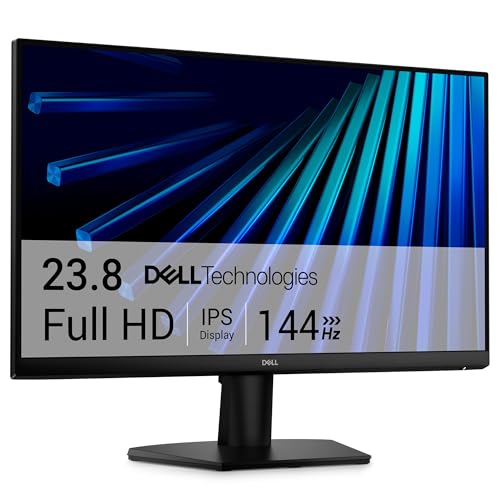
Dell SE2726H 27-inch 144Hz FHD IPS Monitor
Best for: 1080p gamers prioritizing smooth motion
- Refresh Rate
- 144Hz (what this guide is about)
- Screen Size
- 27-inch
- Resolution
- 1920x1080
- Panel Type
- IPS
- Response Time
- 1ms MPRT
- Sync Technology
- AMD FreeSync
View on Amazon: Dell SE2726H 27-inch 144Hz FHD IPS Monitor Affiliate link
The Dell SE2726H is a 27-inch 1080p monitor with a 144Hz refresh rate and 1ms MPRT response time. It uses IPS panel technology for wide 178-degree viewing angles and consistent color. The display features AMD FreeSync support and TÜV Rheinland eye comfort certification. This model suits users who prioritize smooth motion and color accuracy over high resolution on a budget.
Pros
- 144Hz refresh rate for fluid motion
- IPS panel with 178-degree viewing angles
- 1ms MPRT response time
- TÜV Rheinland eye comfort certified
Cons
- 1080p resolution on a 27-inch screen lowers pixel density
- Only includes HDMI connectivity
- No USB-C port available
Good fit if
- You want a smooth 144Hz experience for casual gaming
- You prefer IPS color accuracy and wide viewing angles
- You need a compact 27-inch display for standard desks
Skip if
- You require 4K resolution for sharp text
- You need USB-C connectivity for single-cable setups
- You are comparing against 4K 120Hz VA panels like the Dell S3225QS
Verdict: Dell SE2726H 27-inch 144Hz IPS Monitor offers solid 1080p performance for users who value refresh rate and color consistency over pixel density.
Specifications side by side
| Spec | Dell 32-Inch 4K 120Hz Monitor | Dell SE2726H 27-inch 144Hz FHD IPS Monitor |
|---|---|---|
| Screen Size | 31.5in | 27-inch |
| Resolution | 3840x2160 | 1920x1080 |
| Refresh Rate | 120Hz | 144Hz |
| Panel Type | not stated | IPS |
| Response Time | 0.03ms | 1ms MPRT |
| Sync Technology | AMD FreeSync Premium | AMD FreeSync |
| Connectivity | HDMI, DisplayPort | 2X HDMI |
| Dimensions | 8.73 × 28.1 × 17.6 inches | 7.87 × 24.1 × 17.9 inches |
| Weight | 19.3 pounds | 9.83 pounds |
| Size | S3225QS | SE2726H |
| Color | Ash White | Black |
| Model | S3225QS | SE2726H |
Frequently asked questions
Is 144Hz noticeably smoother than 120Hz for gaming?
The jump from 120Hz to 144Hz adds 24 frames per second. This difference is subtle but can improve motion clarity in fast-paced titles. You will see smoother transitions if you prioritize high refresh rates. The Dell SE2726H offers this 144Hz speed for consistent motion.
Does a higher refresh rate improve visual quality in non-gaming tasks?
Higher refresh rates primarily benefit motion smoothness rather than static image quality. Tasks like web browsing or document editing do not require 144Hz. You should choose based on whether you need the extra smoothness for games or prefer higher resolution for detailed work.
Which monitor is better for 4K content creation?
The Dell S3225QS is the better choice for 4K content creation. It provides 4K UHD resolution on a 32-inch VA panel. This model emphasizes color accuracy over the 24Hz advantage of 144Hz. It covers 99% sRGB and 95% DCI-P3 for vivid, accurate colors.
Is FreeSync available on both 120Hz and 144Hz models?
Yes, both listed monitors include AMD FreeSync technology. This feature synchronizes the refresh rate with the frame rate to reduce screen tearing. It ensures a smoother experience during gameplay. Both the Dell S3225QS and SE2726H support this synchronization for compatible graphics cards.
Should I prioritize resolution or refresh rate?
Your choice depends on whether you value sharpness or speed. The S3225QS offers 4K clarity for detailed visuals. The SE2726H provides 1080p resolution with a faster 144Hz refresh rate. Choose the 4K model for work and media, or the 144Hz model for smooth gaming motion.
Are these monitors suitable for long gaming sessions?
Both models include eye comfort features designed for longer use. They reduce eye strain during extended periods of viewing. The Dell S3225QS offers a larger 32-inch screen for immersive experiences. The SE2726H provides a 27-inch IPS panel for consistent color and smooth motion.