Refresh Rate in Ultrawide Monitors: What It Is and Is It Worth It?
As an Amazon Associate we earn from qualifying purchases. Links on this page are affiliate links.
Understanding Ultrawide Refresh Rates
Refresh rate is the number of times your screen updates each second. You see this number as Hertz, or Hz. A 60Hz panel shows sixty images every second. A 240Hz panel shows two hundred and forty. This spec matters most for gaming and fast motion.
When you move the mouse or turn in a game, higher refresh rates make that motion look smoother. Lower rates can cause stuttering or blur. Your eyes perceive fluidity better when the frame count is high. This is why gamers look for high numbers.
Ultrawide monitors come with various refresh rates. You will find 60Hz and 75Hz models. These are common for office work and general browsing. They are sufficient for typing, reading, and watching videos. You do not need more speed for these tasks.
For gaming, the options expand significantly. Many ultrawide panels offer 100Hz, 120Hz, 144Hz, and 165Hz. These are standard for mid-range gaming setups. They provide a noticeable improvement over 60Hz. The motion feels more responsive and clear.
High-end ultrawide monitors push further. You can find 180Hz, 200Hz, and 240Hz panels. These are for competitive gamers who want every advantage. The difference between 144Hz and 240Hz is subtle but real. Fast-paced shooters benefit from the extra frames.
When you browse listings, look for the Hz number. It is usually listed near the resolution and panel type. Check if your graphics card can push that many frames. A high refresh rate is useless if your computer cannot generate enough frames. Match your hardware to the monitor spec.
This guide covers refresh rate explained. You now know what the number means. Decide if you need smooth office work or competitive gaming. Choose the Hz that fits your usage. Higher is not always better if your budget is tight. Pick the spec that matches your needs.
Ultrawide Refresh Rate Guide
240Hz
This refresh rate delivers the highest motion clarity available in consumer monitors. You see twenty-four frames every second compared to the standard six. This reduces motion blur significantly in fast-paced shooters. It requires powerful graphics hardware to drive these frame counts. Most ultrawide panels do not reach this speed. You will find this spec in niche gaming displays. The trade-off is often lower resolution or smaller screen sizes. It suits competitive players who need every millisecond advantage. Standard office tasks do not benefit from this speed.
200Hz
A 200Hz panel offers near-top-tier smoothness for gaming. You get twenty images per second more than a 180Hz screen. This level of speed is rare in ultrawide formats. The SANSUI 34-inch model provides this rate for 1440p gaming. It fits buyers who want high refresh rates without sacrificing screen width. The motion clarity is excellent for racing and action games. You need strong GPU performance to utilize this fully. It is a practical choice for enthusiasts who want speed. The panel type often dictates the color accuracy at this speed.
165Hz
Alienware offers this rate in its 34-inch QD-OLED model. You see sixteen images per second for smooth gameplay. This speed is standard for high-end gaming ultrawides. It provides excellent motion clarity for most game genres. The QD-OLED panel adds superior contrast to this speed. You get sharp visuals and fast response times. It suits gamers who value image quality alongside refresh rate. The 165Hz rate handles fast motion well without blur. It is a balanced choice for mixed gaming and media use. You do not need extreme hardware to drive this speed.
144Hz
This is the baseline for modern gaming monitors. You see fourteen images every second. It offers a clear improvement over 60Hz for gaming. The Dell SE2726H provides this rate on a standard screen. For ultrawides, 144Hz is a common target for performance. You get smooth motion in most action and strategy games. It requires moderate GPU power to maintain high frame rates. This spec suits gamers who want speed without premium costs. It is a practical choice for 1440p ultrawide displays. You will find this rate in many mainstream gaming models.
120Hz
The Dell S3225QS delivers this rate with 4K resolution. You see twelve images per second. This spec balances clarity and speed for mixed use. It is suitable for console gaming and casual PC play. You get smoother motion than 60Hz without high hardware demands. The 4K resolution provides sharp text and detailed images. It fits users who prioritize screen clarity over extreme speed. The VA panel offers good contrast for this refresh rate. You can use this monitor for work and light gaming. It is a versatile choice for non-competitive players.
60Hz
This is the standard refresh rate for most monitors. You see six images per second. It is sufficient for office work and basic computing. The VisionOwl portable monitor offers this with 4K resolution. You get sharp images for travel or secondary displays. It is not ideal for gaming or fast motion. You will see motion blur in fast-paced games. It requires minimal GPU power to drive this speed. It is a practical choice for non-gaming ultrawide setups. You get adequate visual fluidity for general desktop use. It is the baseline for all display technologies.
Is High Refresh Rate Worth It
Who needs it
You need high refresh rates if you play competitive shooters or racing games. The jump from 60Hz to 144Hz or 240Hz makes motion smoother. You see enemies and obstacles clearer. Fast pans do not blur as much. This clarity helps you react faster. If your graphics card can push high frame rates, this spec matters. You will notice the difference immediately. Lower input lag also improves responsiveness. You feel more in control. Casual gamers might not care as much. But for serious players, every frame counts. The higher the number, the smoother the experience. It is a key upgrade for performance.
Who can skip it
You can skip high refresh rates if you do not game often. Office work and web browsing look fine at 60Hz. Text and static images do not need more updates. You save money by choosing lower specs. Focus on resolution and color accuracy instead. These matter more for photo editing or video watching. A 4K panel with 60Hz is better for media. You get sharper details. High refresh rates are useless if your GPU cannot drive them. Do not pay extra for speed you cannot use. Stick to standard rates. You will not miss the smoothness. Prioritize panel quality and connectivity. These features help more in daily tasks. Keep it simple and practical.
Refresh Rate Glossary
Hertz (Hz)
The unit measuring screen updates per second. Higher numbers mean smoother motion. Common values range from 60Hz for basic use to 240Hz for competitive gaming.
Frame Rate
How many images your graphics card sends to the monitor each second. The monitor refreshes based on this data. Matching these values prevents stuttering.
Motion Blur
Visual smearing during fast movement. High refresh rates reduce this effect. This helps you track moving objects clearly in fast-paced games or videos.
Response Time
How quickly a pixel changes color. Measured in milliseconds. Fast response times prevent ghosting. This complements high refresh rates for crisp motion clarity.
Sync Technology
Features like G-Sync or FreeSync. They match the monitor refresh rate to the GPU frame rate. This eliminates screen tearing and reduces input lag.
Ultrawide Aspect Ratio
Typically 21:9 or 32:9. These monitors offer more horizontal space. They enhance immersion in games and productivity tasks compared to standard 16:9 screens.
Resolution
The number of pixels on the screen. Higher resolution means sharper images. Ultrawide monitors often use WQHD or 4K to maintain clarity across the wider field.
Quick picks
| # | Product | Best for | Price |
|---|---|---|---|
| 1 | Dell 32-Inch 4K 120Hz Monitor | 4K clarity and moderate speed | Check price of Dell 32-Inch 4K 120Hz Monitor on Amazon |
| 2 | Dell SE2726H 27-inch 144Hz FHD IPS Monitor | 144Hz gaming on standard 16:9 screens | Check price of Dell SE2726H 27-inch 144Hz FHD IPS Monitor on Amazon |
| 3 | Alienware 34-Inch Curved QD-OLED Monitor | Ultrawide OLED gamers seeking contrast | Check price of Alienware 34-Inch Curved QD-OLED Monitor on Amazon |
| 4 | Philips 27-Inch 100Hz VA Monitor | Office work and multi-monitor setups | Check price of Philips 27-Inch 100Hz VA Monitor on Amazon |
| 5 | SANSUI 34-Inch Curved 200Hz Ultrawide Monitor | high-refresh-rate 1440p curved ultrawide gaming | Check price of SANSUI 34-Inch Curved 200Hz Ultrawide Monitor on Amazon |
| 6 | VisionOwl 23.8-Inch 4K UHD Portable Monitor | Portable 4K secondary display with color accuracy | Check price of VisionOwl 23.8-Inch 4K UHD Portable Monitor on Amazon |
Our 6 picks

Dell 32-Inch 4K 120Hz Monitor
Best for: 4K clarity and moderate speed
- Refresh Rate
- 120Hz (what this guide is about)
- Screen Size
- 31.5in
- Resolution
- 3840x2160
- Response Time
- 0.03ms
- Sync Technology
- AMD FreeSync Premium
- Connectivity
- HDMI, DisplayPort
View on Amazon: Dell 32-Inch 4K 120Hz Monitor Affiliate link
The Dell S3225QS is a 32-inch VA panel monitor with 4K UHD resolution and a 120Hz refresh rate. It features AMD FreeSync Premium and a 0.03ms response time for smooth visuals. The display covers 99% sRGB and 95% DCI-P3 with a 1500:1 contrast ratio. It includes ComfortView Plus to reduce blue light. This monitor suits users seeking high resolution and moderate refresh rates for mixed work and gaming.
Pros
- 4K UHD resolution for sharp detail
- 120Hz refresh rate with AMD FreeSync Premium
- 99% sRGB and 95% DCI-P3 color coverage
- 0.03ms response time for fluid motion
- ComfortView Plus reduces blue light emissions
Cons
- 120Hz refresh rate is lower than the 200Hz and 240Hz options on this list
- VA panel contrast ratio is 1500:1, which is lower than typical OLED panels
- Ash white finish may not match all desk setups
Good fit if
- You want 4K resolution for crisp text and images
- You need a moderate 120Hz refresh rate for gaming and work
- You prefer a minimalist ash white design
Skip if
- You require a refresh rate above 120Hz for competitive gaming
- You need a curved screen for immersion
- You prefer a black or dark-colored monitor
Verdict: Dell S3225QS 32-inch 4K 120Hz Monitor is a solid choice for users who prioritize 4K clarity and moderate speed over high refresh rates. It fits those who want a clean, white design for mixed use.
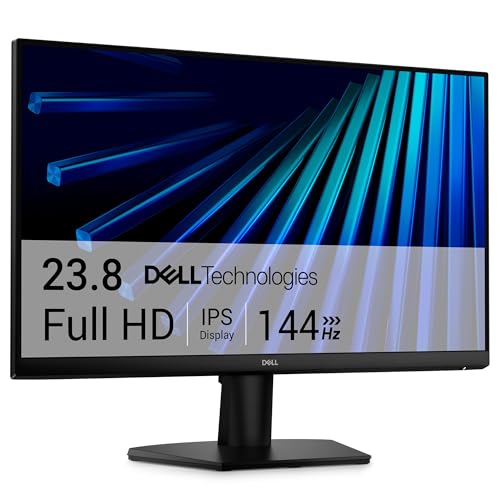
Dell SE2726H 27-inch 144Hz FHD IPS Monitor
Best for: 144Hz gaming on standard 16:9 screens
- Refresh Rate
- 144Hz (what this guide is about)
- Screen Size
- 27-inch
- Resolution
- 1920x1080
- Panel Type
- IPS
- Response Time
- 1ms MPRT
- Sync Technology
- AMD FreeSync
View on Amazon: Dell SE2726H 27-inch 144Hz FHD IPS Monitor Affiliate link
The Dell SE2726H is a 27-inch FHD monitor featuring a 144Hz refresh rate and 1ms MPRT response time. It uses IPS technology for consistent color and wide viewing angles. This display includes AMD FreeSync to reduce screen tearing. It carries a TÜV Rheinland 3-star certification for eye comfort. The monitor connects via HDMI ports and has an ultra-thin bezel design. It suits users seeking smooth motion in a compact form factor.
Pros
- 144Hz refresh rate for fluid motion
- IPS panel for wide 178° viewing angles
- 1ms MPRT response time
- TÜV Rheinland 3-star eye comfort certification
- AMD FreeSync support
Cons
- 1920x1080 resolution on a 27-inch screen lowers pixel density
- Only includes HDMI connectivity, lacking DisplayPort
- No USB-C connectivity listed in specifications
Good fit if
- You want a 144Hz refresh rate for smoother gaming
- You prefer IPS panels for accurate colors
- You need a 27-inch screen for standard desk setups
Skip if
- You require 4K resolution for sharp text
- You need DisplayPort connectivity for your PC
- You want an ultrawide aspect ratio for productivity
Verdict: The Dell SE2726H 27-inch 144Hz FHD Monitor offers solid 144Hz performance and IPS color accuracy for standard desktop use. It is best for gamers who prioritize refresh rate over high resolution on a 16:9 screen.

Alienware 34-Inch Curved QD-OLED Monitor
Best for: Ultrawide OLED gamers seeking contrast
- Refresh Rate
- 165Hz (what this guide is about)
- Screen Size
- 34-inch
- Panel Type
- QD-OLED
- Aspect Ratio
- 21:9
- Response Time
- 0.1Ms
- Sync Technology
- AMD FreeSync Premium Pro
View on Amazon: Alienware 34-Inch Curved QD-OLED Monitor Affiliate link
This Alienware monitor uses a 34-inch QD-OLED panel with a 21:9 aspect ratio. It offers a 165Hz refresh rate and a 0.1ms response time. The display covers 99.3% of the DCI-P3 color gamut. AMD FreeSync Premium Pro helps reduce screen tearing. This setup suits gamers who want fast motion clarity and deep contrast without the black crush common in other panels.
Pros
- QD-OLED panel for infinite contrast and true blacks
- 165Hz refresh rate for smooth motion
- 0.1ms response time reduces input lag
- 99.3% DCI-P3 color coverage for accurate visuals
Cons
- 165Hz refresh rate is lower than the 240Hz and 200Hz options on this list
- 34-inch size is narrower than standard 27-inch or 32-inch alternatives
- Weight is 20.5 pounds, making it bulkier than smaller monitors
Good fit if
- You prioritize OLED contrast and color accuracy over maximum refresh rates
- You want a 21:9 ultrawide aspect ratio for immersive gaming
- You need a 0.1ms response time for competitive play
Skip if
- You require a 240Hz or 200Hz refresh rate for esports
- You prefer a 16:9 aspect ratio for standard content
- You need a lightweight monitor for frequent travel
Verdict: Alienware 34-inch QD-OLED 165Hz delivers superior image quality and speed for gamers who value OLED contrast over the highest possible refresh rates found in other ultrawide models.

Philips 27-Inch 100Hz VA Monitor
Best for: Office work and multi-monitor setups
- Refresh Rate
- 100Hz (what this guide is about)
- Screen Size
- 27"
- Resolution
- 1920 x 1080
- Response Time
- 4ms GtG
- Sync Technology
- Adaptive Sync
- Connectivity
- HDMI 1.4, VGA
View on Amazon: Philips 27-Inch 100Hz VA Monitor Affiliate link
This Philips 27-inch monitor offers Full HD 1920x1080 resolution with a 100Hz refresh rate. It uses a VA panel for strong contrast and wide viewing angles. The design is bezel-free on three sides, making it suitable for multi-monitor setups. You get 16.7 million colors and an EasyRead mode for documents. It is a practical option for standard desktop use.
Pros
- 100Hz refresh rate for smoother motion
- VA panel with deep blacks and high contrast
- 178/178 degree wide viewing angles
- Bezel-free design for multi-monitor setups
Cons
- 100Hz refresh rate is lower than gaming-focused options
- Full HD resolution on 27 inches yields lower pixel density
- No USB-C connectivity listed in specifications
Good fit if
- You need a standard 100Hz refresh rate for office work
- You want a VA panel for better contrast than IPS
- You are building a multi-monitor desk setup
Skip if
- You require high refresh rates above 120Hz for gaming
- You need 4K resolution for sharp text
- You want an ultrawide aspect ratio for productivity
Verdict: Philips 27" 100Hz FHD Monitor suits users who prioritize contrast and multi-monitor setups over high refresh rates. It is not ideal for competitive gaming or high-resolution needs.

SANSUI 34-Inch Curved 200Hz Ultrawide Monitor
Best for: high-refresh-rate 1440p curved ultrawide gaming
- Refresh Rate
- 200Hz (what this guide is about)
- Screen Size
- 34"
- Resolution
- 3440 x 1440
- Panel Type
- Fast VA
- Aspect Ratio
- 21:9
- Response Time
- OD 1ms
View on Amazon: SANSUI 34-Inch Curved 200Hz Ultrawide Monitor Affiliate link
This 34-inch curved display pairs an ultrawide 3440 x 1440 resolution with a 200Hz refresh rate. It uses a Fast VA panel with a 1500R curve and includes two HDMI 2.1 ports alongside DisplayPort 1.4. You get variable refresh rate support and Picture-in-Picture functionality, making it suitable if you want high-frame-rate ultrawide gaming on a desktop setup.
Pros
- 200Hz refresh rate over DisplayPort 1.4 and HDMI 2.1
- UWQHD 3440 x 1440 resolution on a 21:9 Fast VA panel
- 1500R curvature with 1ms overdrive response time
- Dual HDMI 2.1 inputs with variable refresh rate support
Cons
- Stand adjustment is restricted to tilt from -5° to 15°
- Replacement and refund coverage is limited to 30 days
Good fit if
- You want a 200Hz refresh rate at 3440 x 1440 ultrawide resolution.
- You connect modern graphics cards or consoles using HDMI 2.1.
- You plan to use Picture-in-Picture or Picture-by-Picture viewing.
Skip if
- You need a stand with height, swivel, or pivot adjustment.
- You prefer an IPS panel instead of a curved Fast VA screen.
Verdict: SANSUI 34-Inch 200Hz Curved Ultrawide Monitor delivers high-refresh-rate 1440p ultrawide gameplay for desktop players with HDMI 2.1 or DisplayPort hardware. It fits buyers who prioritize 200Hz motion clarity over ergonomic stand adjustments.

VisionOwl 23.8-Inch 4K UHD Portable Monitor
Best for: Portable 4K secondary display with color accuracy
- Refresh Rate
- 60Hz (what this guide is about)
- Screen Size
- 23.8"
- Resolution
- 3840 x 2160
- Connectivity
- USB-C, HDMI
- Dimensions
- 0.7 × 21.5 × 12.8 inches
- Weight
- 5.47 pounds
View on Amazon: VisionOwl 23.8-Inch 4K UHD Portable Monitor Affiliate link
This is a 23.8-inch portable display with 4K UHD resolution and a 60Hz refresh rate. It offers 144% sRGB color coverage and 280 nits of brightness. The metal build includes USB-C and HDMI connectivity. It serves as a high-resolution second screen for laptops, consoles, or PCs. The 60Hz rate limits fast motion clarity compared to higher refresh options.
Pros
- 4K UHD 3840 x 2160 resolution for sharp detail
- 144% sRGB wide color gamut for accurate colors
- 280 nits brightness and 1300:1 contrast ratio
- Metal housing with integrated adjustable stand
- USB-C and HDMI connectivity options
Cons
- 60Hz refresh rate limits motion smoothness
- 280 nits brightness is lower than many desktop monitors
- 23.8-inch size is smaller than standard ultrawide displays
Good fit if
- You need a high-resolution portable second screen
- You prioritize color accuracy for creative work
- You want a metal build for durability
Skip if
- You require high refresh rates for competitive gaming
- You need a large primary desktop display
- You want high brightness for bright rooms
Verdict: VisionOwl 23.8-Inch 4K Portable Monitor is a solid choice for users needing a sharp, color-accurate secondary display for travel or desk setups. It suits creative professionals and casual gamers who value resolution over speed.
Specifications side by side
| Spec | Dell 32-Inch 4K 120Hz Monitor | Dell SE2726H 27-inch 144Hz FHD IPS Monitor | Alienware 34-Inch Curved QD-OLED Monitor | Philips 27-Inch 100Hz VA Monitor | SANSUI 34-Inch Curved 200Hz Ultrawide Monitor | VisionOwl 23.8-Inch 4K UHD Portable Monitor |
|---|---|---|---|---|---|---|
| Screen Size | 31.5in | 27-inch | 34-inch | 27" | 34" | 23.8" |
| Resolution | 3840x2160 | 1920x1080 | not stated | 1920 x 1080 | 3440 x 1440 | 3840 x 2160 |
| Refresh Rate | 120Hz | 144Hz | 165Hz | 100Hz | 200Hz | 60Hz |
| Panel Type | not stated | IPS | QD-OLED | not stated | Fast VA | not stated |
| Aspect Ratio | not stated | not stated | 21:9 | not stated | 21:9 | not stated |
| Response Time | 0.03ms | 1ms MPRT | 0.1Ms | 4ms GtG | OD 1ms | not stated |
| Sync Technology | AMD FreeSync Premium | AMD FreeSync | AMD FreeSync Premium Pro | Adaptive Sync | AdaptiveSync, VRR | not stated |
| Connectivity | HDMI, DisplayPort | 2X HDMI | not stated | HDMI 1.4, VGA | DP 1.4, 2 x HDMI 2.1, Earphone | USB-C, HDMI |
| Size | S3225QS | SE2726H | 34.0" OLED | 27 inch 100Hz | 34 Inch | 23.8 inch |
| Dimensions | 8.73 × 28.1 × 17.6 inches | 7.87 × 24.1 × 17.9 inches | 32.1 × 12 × 20.7 inches | 9.1 × 24.2 × 18 inches | 8.6 × 31.8 × 18 inches | 0.7 × 21.5 × 12.8 inches |
| Weight | 19.3 pounds | 9.83 pounds | 20.5 pounds | not stated | 15.4 pounds | 5.47 pounds |
| Color | Ash White | Black | Black | Black | Black | Black |
| Model | S3225QS | SE2726H | AW3423DWF | 271V8LB | ES-G34C5 | V23UH |
Frequently asked questions
Does a higher refresh rate improve image quality?
No. Refresh rate measures motion smoothness, not static image clarity. Resolution and panel type determine sharpness and color. For example, the Dell S3225QS offers 4K UHD resolution at 120Hz. You get crisp details alongside moderate motion handling. The Alienware AW3423DWF uses QD-OLED technology for superior contrast at 165Hz. Choose resolution for clarity and refresh rate for speed.
Is 120Hz enough for ultrawide gaming?
Yes for many users. Twelve frames update every second faster than the standard 60Hz baseline. This reduces blur in moderately fast games. The Dell S3225QS delivers this rate with 4K clarity. It suits mixed use where high speed is not the only priority. If you play slower paced titles, 120Hz provides a noticeable upgrade over 60Hz without requiring top-tier hardware.
Can I use a 200Hz monitor for office work?
Yes. Higher refresh rates make scrolling and cursor movement smoother. The SANSUI ES-G34C5 offers 200Hz on a 34-inch curved screen. This benefits desktop productivity by reducing eye strain during long sessions. While it targets gamers, the smoothness helps general computing. You simply need compatible HDMI 2.1 or DisplayPort connections to drive the high frame rate.
What is the difference between 144Hz and 165Hz?
The difference is twenty-one updates per second. Both rates offer significant smoothness over 60Hz. The Dell SE2726H runs at 144Hz on a standard 16:9 screen. The Alienware AW3423DWF runs at 165Hz on an ultrawide QD-OLED panel. The extra five percent in frame updates is marginal for most users. Focus on panel type and resolution for a better experience.
Do I need FreeSync for high refresh rates?
It helps prevent screen tearing. FreeSync matches the monitor refresh rate to the graphics card output. The Dell SE2726H and Alienware AW3423DWF both include FreeSync. This ensures stable performance when frame rates fluctuate. Without it, you might see visual artifacts. Check that your graphics card supports the specific sync technology listed in the monitor attributes.
Is 60Hz still acceptable for ultrawide displays?
It is acceptable for non-gaming tasks. Six updates per second is the standard baseline. The VisionOwl V23UH provides 60Hz with 4K UHD resolution. This is ideal for portable secondary displays or creative work where color accuracy matters more than speed. It is not ideal for competitive gaming. You will notice motion blur in fast-paced titles compared to higher refresh options.