LG vs Philips Computer Monitors: Ultrawide Monitors Compared by Specs
As an Amazon Associate we earn from qualifying purchases. Links on this page are affiliate links.
When comparing LG vs philips computer monitors ultrawide monitor options, you will notice both brands offer Full HD displays for general use. The LG 24U411A-B and the Philips 271V8LB share a 1920x1080 resolution but differ in panel technology and screen dimensions. The LG model features an IPS panel with a 120Hz refresh rate, while the Philips uses a VA panel at 100Hz. These specifications affect color accuracy, contrast, and motion handling differently. You should review the detailed spec breakdown below to see which aligns with your workflow needs.
Key differences
| Aspect | LG 24-Inch 120Hz IPS Monitor | Philips 27-Inch 100Hz VA Monitor |
|---|---|---|
| Screen Size | 24 inches | 27 inches |
| Panel Type | IPS | VA |
| Refresh Rate | 120Hz | 100Hz |
| Connectivity | HDMI | not listed |
| Response Time | 1ms MBR | not listed |
Which one should you choose?
Choose LG 24-Inch 120Hz IPS Monitor if
- You prefer a faster 120Hz refresh rate for smoother motion in games or scrolling.
- You need the wider viewing angles and color consistency typical of an IPS panel.
- You want a more compact 24-inch footprint for smaller desks or dual-monitor setups.
Choose Philips 27-Inch 100Hz VA Monitor if
- You prioritize deeper blacks and higher contrast ratios found in VA panels.
- You prefer a larger 27-inch screen for better immersion or document viewing.
- You are looking for a monitor with a 100Hz refresh rate for standard productivity tasks.
Verdict: The LG monitor suits users who value higher refresh rates and consistent color viewing angles. The Philips option is better for those who want a larger screen and deeper contrast for media consumption. Choose based on whether you prioritize speed and color accuracy or screen real estate and contrast.
LG vs Philips Monitor Spec Comparison
Screen size
The Philips 27-Inch 100Hz VA Monitor offers a larger 27-inch display surface compared to the LG 24-Inch 120Hz IPS Monitor, which features a 24-inch panel. Both monitors deliver Full HD 1920x1080 resolution, ensuring sharp imagery on their respective screens. The Philips model provides more physical screen real estate for multitasking or immersive viewing, while the LG unit remains more compact. If you require a bigger canvas for your workspace or media consumption, the Philips option is the clear choice. The LG monitor suits users who prefer a smaller footprint on their desk.
Refresh rate
When it comes to motion smoothness, the LG 24-Inch 120Hz IPS Monitor holds an advantage with its 120Hz refresh rate. The Philips 27-Inch 100Hz VA Monitor operates at a standard 100Hz. A higher refresh rate allows for more fluid frame transitions, which can reduce motion blur during fast-paced gaming or scrolling. The LG monitor’s 120Hz capability provides a smoother visual experience compared to the Philips 100Hz panel. For users prioritizing responsive visuals in gaming or dynamic content, the LG specification is superior. The difference is measurable in motion clarity.
Panel type
The two monitors utilize different panel technologies: the LG 24-Inch 120Hz IPS Monitor uses an IPS panel, while the Philips 27-Inch 100Hz VA Monitor uses a VA panel. IPS panels are known for accurate color reproduction and wide viewing angles, maintaining consistency even when viewed from the side. VA panels typically offer higher contrast ratios, producing deeper blacks and brighter whites. The LG monitor is better suited for color-critical work and varied viewing positions. The Philips monitor excels in media consumption where contrast and deep blacks enhance the image. Your choice depends on whether you prioritize color accuracy or contrast depth.
Connectivity
Connectivity options are limited on both devices based on the provided specifications. The LG 24-Inch 120Hz IPS Monitor explicitly lists HDMI as its connectivity port. The Philips 27-Inch 100Hz VA Monitor does not specify its connection types in the available data. While HDMI is a standard and versatile interface, the lack of listed details for the Philips model means you cannot confirm if it offers additional ports like DisplayPort or USB hubs. If you need to verify port variety, you should check the Philips specifications directly. For now, the LG monitor offers confirmed HDMI access.
Response time
The LG 24-Inch 120Hz IPS Monitor specifies a 1ms Motion Blur Reduction (MBR) response time. The Philips 27-Inch 100Hz VA Monitor does not list a specific response time value in the provided data. A 1ms MBR rating indicates the monitor can minimize ghosting and blur during fast motion, which is beneficial for gaming. Without a stated response time for the Philips model, you cannot directly compare their speed capabilities. The LG monitor provides a clear advantage in this category due to its published specification. If low latency is critical, the LG data is more transparent.
Which Monitor Fits Your Needs
Fast-paced gamers needing smooth motion
The LG 24U411A-B offers a 120Hz refresh rate and 1ms Motion Blur Reduction. This combination minimizes screen stutter and ghosting during fast action. Dynamic Action Sync further reduces input lag, ensuring your reactions match on-screen events instantly for competitive play.
Users wanting larger screen real estate
The Philips 271V8LB provides a 27-inch display surface. This extra space is ideal for multitasking or immersive media consumption. The VA panel delivers deeper blacks and high contrast, making images appear more vivid and detailed compared to standard IPS panels.
Color-conscious creators and designers
The LG monitor supports HDR10 and covers up to 99% of the sRGB color gamut. This ensures rich, accurate colors across a wide spectrum. It is better suited for creative projects where color fidelity and vibrant visuals are essential for professional output.
Office workers reading long documents
The Philips 271V8LB includes an EasyRead mode designed for busy office environments. This feature creates a paper-like display experience, reducing eye strain during extended periods of text-heavy work. The bezel-free design also supports seamless multi-monitor setups for enhanced productivity.
The products compared
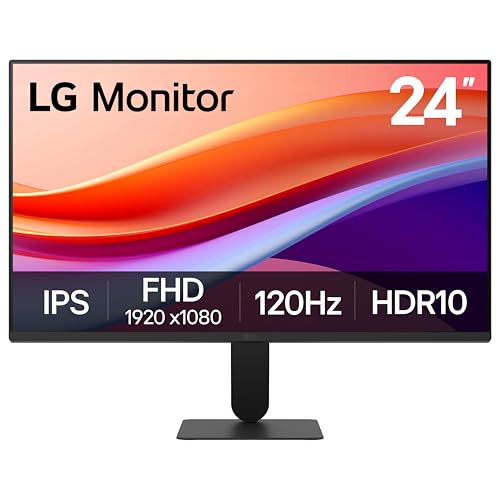
LG 24-Inch 120Hz IPS Monitor
Best for: Compact gaming and multitasking setups
- Screen Size
- 24"
- Resolution
- 1920 x 1080
- Refresh Rate
- 120Hz
- Panel Type
- IPS
- Response Time
- 1ms MBR
- Connectivity
- HDMI
View on Amazon: LG 24-Inch 120Hz IPS Monitor Affiliate link
This LG monitor offers a 24-inch Full HD IPS panel with a 120Hz refresh rate. It includes HDR10 support and 99% sRGB coverage for accurate colors. The 1ms Motion Blur Reduction helps with fast-paced gaming. You get a virtually borderless design and tilt adjustment. The Switch app allows for screen splitting. It connects via HDMI. This setup suits users who want smooth motion and clear visuals in a compact form.
Pros
- 120Hz refresh rate for smoother motion
- 1ms Motion Blur Reduction (MBR)
- 99% sRGB color gamut coverage
- HDR10 support
- Switch app for screen splitting
Cons
- Only HDMI connectivity available
- Tilt-only stand adjustment
- Standard 1080p resolution limits detail
Good fit if
- You need a compact 24-inch display
- You want higher refresh rates for gaming
- You prefer IPS panel color accuracy
Skip if
- You require multiple input ports
- You need height or swivel adjustments
- You want a larger 27-inch screen
Verdict: LG 24U411A-B 24-inch 120Hz IPS Monitor delivers smooth 120Hz performance and accurate colors in a small footprint. It fits users who prioritize motion clarity and screen flexibility over extensive connectivity or larger sizes.

Philips 27-Inch 100Hz VA Monitor
Best for: Office work and media viewing
- Screen Size
- 27"
- Resolution
- 1920 x 1080
- Refresh Rate
- 100Hz
- Response Time
- 4ms GtG
- Sync Technology
- Adaptive Sync
- Connectivity
- HDMI 1.4, VGA
View on Amazon: Philips 27-Inch 100Hz VA Monitor Affiliate link
The Philips 271V8LB is a 27-inch Full HD monitor with a 100Hz refresh rate. It uses a VA panel for deep blacks and wide viewing angles. The bezel-free design supports multi-monitor setups. EasyRead mode helps with document viewing. It suits office workers and casual users who prioritize contrast over speed.
Pros
- 27-inch Full HD 1920x1080 resolution
- 100Hz refresh rate
- VA panel for high contrast
- 178/178 degree viewing angles
- EasyRead mode for documents
Cons
- Lower 100Hz refresh rate compared to 120Hz competitors
- Standard 1080p resolution on a 27-inch screen
- No mention of USB-C connectivity
Good fit if
- You need a large screen for office work
- You want deep blacks for media consumption
- You are building a multi-monitor setup
Skip if
- You require ultrawide resolution
- You need high refresh rates for gaming
- You prefer IPS panel color accuracy
Verdict: Philips 27-inch 100Hz VA Monitor offers strong contrast for office tasks. It fits users who value screen real estate and document readability over high frame rates.
Specifications side by side
| Spec | LG 24-Inch 120Hz IPS Monitor | Philips 27-Inch 100Hz VA Monitor |
|---|---|---|
| Screen Size | 24" | 27" |
| Resolution | 1920 x 1080 | 1920 x 1080 |
| Refresh Rate | 120Hz | 100Hz |
| Panel Type | IPS | not stated |
| Response Time | 1ms MBR | 4ms GtG |
| Sync Technology | not stated | Adaptive Sync |
| Connectivity | HDMI | HDMI 1.4, VGA |
| Size | 24 Inch | 27 inch 100Hz |
| Dimensions | 8.7 × 21.2 × 16.4 inches | 9.1 × 24.2 × 18 inches |
| Weight | 7.1 pounds | not stated |
| Color | Black | Black |
| Model | 24U411A-B.AUSQ | 271V8LB |
Frequently asked questions
Is the LG 24U411A-B suitable for competitive gaming?
Yes, it supports a 120Hz refresh rate. This higher frame rate reduces motion blur and provides smoother visuals during fast-paced action. The IPS panel also ensures accurate colors, which helps you spot details in complex scenes. It fits users who prioritize motion clarity over extensive connectivity options.
Which monitor offers better contrast for media viewing?
The Philips 271V8LB uses a VA panel, which typically delivers stronger contrast ratios than the IPS panel found in the LG model. This allows for deeper blacks and more vivid images. It is ideal for office work and media viewing where screen real estate and document readability are key.
How do the screen sizes compare between these two models?
The Philips monitor features a larger 27-inch display, while the LG model has a 24-inch screen. Both operate at Full HD resolution. The larger Philips screen provides more workspace for multitasking, whereas the compact LG design fits better in smaller desks or setups with limited space.
Does the LG monitor support high refresh rates for smoother motion?
Yes, the LG 24U411A-B runs at 120Hz. This exceeds the standard 60Hz found on many basic monitors. The higher refresh rate ensures smoother animation and reduces stuttering. It is particularly beneficial for gaming or any activity where fluid motion is important for your experience.
Which brand is better for office productivity tasks?
The Philips 27-inch model is often preferred for office work. Its larger 27-inch screen provides more room for documents and spreadsheets. The VA panel offers good contrast for reading text. It suits users who value screen size and readability over the higher refresh rates offered by the LG option.
What type of panel technology does each monitor use?
The LG 24U411A-B uses an IPS panel, known for accurate colors and wide viewing angles. The Philips 271V8LB employs a VA panel, which generally offers higher contrast levels. Your choice depends on whether you prioritize color accuracy and viewing angles or deeper blacks and contrast for media consumption.
Is the LG monitor too small for dual monitor setups?
The LG 24U411A-B is designed as a compact 24-inch display. Its small footprint makes it suitable for tight spaces or as a secondary screen. While it may feel small as a primary display for some, it fits well in setups where space is limited or where a smaller secondary screen is needed.