LG or PHILIPS? Ultrawide Monitors Compared in 2026
As an Amazon Associate we earn from qualifying purchases. Links on this page are affiliate links.
This LG vs PHILIPS ultrawide monitor comparison highlights two distinct Full HD displays. Both offer high refresh rates for smoother motion, but they target different workspace needs. The LG model focuses on color accuracy and multitasking features with an IPS panel. The Philips unit prioritizes a larger viewing area with a VA panel. You must decide which screen size and connectivity options fit your desk setup best.
Key differences
| Aspect | LG 24-Inch 120Hz IPS Monitor | Philips 32-Inch 100Hz VA Monitor |
|---|---|---|
| Screen Size | 24 inches | 32 inches |
| Panel Type | IPS | VA |
| Refresh Rate | 120Hz | 100Hz |
| Connectivity | HDMI | HDMI, DisplayPort, VGA |
| Sync Technology | Dynamic Action Sync | Adaptive-Sync |
Which one should you choose?
Choose LG 24-Inch 120Hz IPS Monitor if
- You need a compact 24-inch display for tight spaces.
- You prefer IPS panels for wider viewing angles.
- You want a higher 120Hz refresh rate for smoother motion.
Choose Philips 32-Inch 100Hz VA Monitor if
- You want a larger 32-inch screen for immersive viewing.
- You need DisplayPort and VGA inputs for older hardware.
- You prefer VA panels for deeper black contrast levels.
Verdict: Choose the LG monitor if you prioritize color accuracy, a higher refresh rate, and a smaller footprint. Pick the Philips monitor if you need a larger 32-inch screen and more versatile connectivity options including DisplayPort and VGA. Both deliver Full HD clarity, so your choice depends on desk space and port requirements.
LG vs Philips Monitor Specs
Screen size and panel
The LG 24-inch monitor uses an IPS panel, while the Philips 32-inch unit features a VA panel. The Philips display offers a significantly larger viewing area with a 31.5-inch viewable screen compared to the LG's 24-inch surface. This size difference impacts your workspace layout, as the Philips unit requires more desk space. The IPS panel on the LG typically provides better color accuracy and wider viewing angles, which benefits creative work. The VA panel on the Philips delivers deeper contrast ratios, enhancing dark scene details in movies and games. You must choose between the compact precision of the LG and the immersive scale of the Philips based on your desk dimensions and visual preferences.
Refresh rate and speed
Both monitors target smooth motion, but they achieve it differently. The LG 24U411A-B offers a 120Hz refresh rate, which is higher than the Philips 32E1N1100L's 100Hz. This 20Hz difference gives the LG a slight advantage in frame fluidity for fast-paced gaming or rapid scrolling. Both units claim a 1ms response time, though the LG specifies Motion Blur Reduction (MBR) technology to minimize ghosting. The Philips relies on Adaptive-Sync technology to prevent screen tearing. For competitive gamers, the higher refresh rate of the LG provides a more responsive experience. However, the Philips 100Hz is still well above standard 60Hz displays, ensuring smooth performance for general use and casual gaming.
Connectivity options
Connectivity is a major differentiator between these two models. The Philips 32-inch monitor provides a more versatile port selection, including HDMI, DisplayPort, and VGA inputs. This inclusion of VGA support is valuable for older computers or legacy equipment that lack digital outputs. The LG 24-inch monitor lists only HDMI connectivity in its key specs. If you need to connect multiple devices or use a specific cable type like DisplayPort, the Philips offers greater flexibility. The LG's simpler setup is sufficient for modern laptops and consoles that primarily use HDMI, but it lacks the expansion options found on the Philips unit.
Color performance
Color reproduction varies based on the panel technology used. The LG monitor highlights its color capabilities, citing up to 99% sRGB color gamut coverage and HDR10 support. This specification suggests the LG is better suited for content creation, photo editing, or media consumption where accurate color representation is critical. The Philips VA panel is not specified with a color gamut percentage in the provided data, though VA panels generally offer high contrast. For users who prioritize vivid, accurate colors for creative work, the LG's explicit sRGB coverage and HDR10 support provide a clear advantage. The Philips focuses more on contrast and size rather than explicit color metrics in its listed features.
Physical dimensions and weight
The physical footprint of each monitor differs significantly. The LG 24-inch model is compact, weighing 7.1 pounds with dimensions of 21.2 inches wide and 16.4 inches high. The Philips 32-inch unit is much larger and heavier, weighing 19.1 pounds with a width of 28.1 inches and height of 20.2 inches. This weight difference may affect your choice if you plan to use a VESA mount or wall mount, as the Philips requires a stand capable of supporting nearly 20 pounds. The LG is easier to move and fits comfortably on smaller desks. The Philips demands a sturdy, spacious workspace to accommodate its substantial size and weight.
Which monitor fits your workflow best
Desk workers needing multitasking ease
The LG 24U411A-B includes a Switch app that splits your screen into six sections. This helps you manage multiple windows for work or streaming. Its IPS panel offers wide viewing angles and 99% sRGB coverage. The 120Hz refresh rate keeps motion smooth. You get cleaner visuals for daily productivity tasks.
Users wanting a larger screen
The Philips 32E1N1100L provides a 32-inch display with a 31.5-inch viewable area. This VA panel delivers a significantly bigger workspace than the LG. It supports Adaptive-Sync for fluid gaming. You also get HDMI, DisplayPort, and VGA connectivity. The larger size is ideal for immersive content or expansive spreadsheets.
Gamers seeking lower input lag
The LG monitor features Dynamic Action Sync to minimize input lag. This helps you react faster to in-game movements. It also offers 1ms Motion Blur Reduction for crisp visuals during fast action. The 120Hz refresh rate ensures smoother frame transitions. You get a responsive experience for competitive gaming sessions.
Buyers wanting extended support
Philips includes a 4-Year Advance Replacement warranty in the United States. This minimizes downtime if the monitor fails. You get peace of mind with this coverage. The monitor also supports VESA wall mounting. This flexibility helps you set up your workspace exactly how you want it without clutter.
The products compared
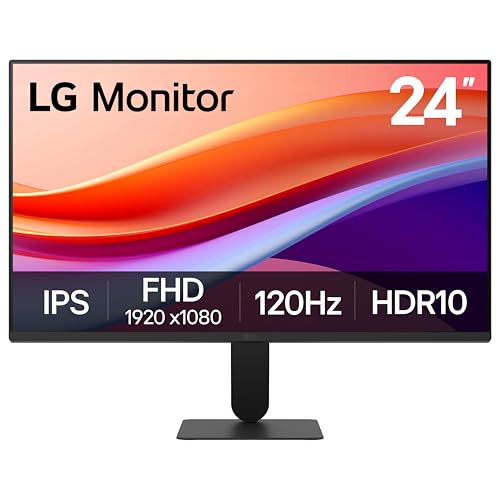
LG 24-Inch 120Hz IPS Monitor
Best for: Compact 120Hz gaming and office use
- Screen Size
- 24"
- Resolution
- 1920 x 1080
- Refresh Rate
- 120Hz
- Panel Type
- IPS
- Response Time
- 1ms MBR
- Connectivity
- HDMI
View on Amazon: LG 24-Inch 120Hz IPS Monitor Affiliate link
This 24-inch LG monitor uses an IPS panel with Full HD resolution. It offers a 120Hz refresh rate and 1ms motion blur reduction for smoother visuals. HDR10 support and 99% sRGB coverage improve color accuracy. The Switch app allows screen splitting. It includes HDMI connectivity and tilt adjustment. This setup suits users who need a compact, responsive display for office work or casual gaming.
Pros
- 120Hz refresh rate for fluid motion
- IPS panel with 99% sRGB color gamut
- 1ms Motion Blur Reduction for crisp gameplay
- HDR10 support for enhanced contrast
- Switch app for flexible screen layout
Cons
- Full HD resolution on a 24-inch screen
- HDMI only, no DisplayPort
- Tilt adjustment only, no height or pivot
Good fit if
- You need a compact 24-inch display
- You want a 120Hz refresh rate for gaming
- You prefer IPS color accuracy
Skip if
- You require 4K resolution
- You need DisplayPort connectivity
- You want height-adjustable stand
Verdict: LG 24U411A 24-inch 120Hz Monitor provides a solid 120Hz IPS experience for users who prioritize color accuracy and smooth motion in a compact form factor. It fits those who do not need high resolution or advanced ergonomic adjustments.

Philips 32-Inch 100Hz VA Monitor
Best for: large-screen 1080p computing with multi-port connectivity
- Screen Size
- 32"
- Resolution
- 1920x1080
- Refresh Rate
- 100Hz
- Response Time
- 1ms MPRT
- Sync Technology
- Adaptive-Sync
- Connectivity
- HDMI 1.4, DisplayPort, VGA, audio out
View on Amazon: Philips 32-Inch 100Hz VA Monitor Affiliate link
This Philips display gives you a 32-inch VA panel running at 1920x1080 resolution with a 100Hz refresh rate. It includes Adaptive-Sync, a 1ms response time, and ports for DisplayPort, HDMI, and legacy VGA video connections. It suits you if you want a large diagonal workspace with everyday gaming support and a 4-year advance replacement warranty.
Pros
- 32-inch VA screen with 100Hz refresh rate and 1ms response time
- DisplayPort, HDMI, VGA, and audio out connectivity
- Adaptive-Sync support for artifact-free visuals
- 4-Year Advance Replacement warranty in the United States
Cons
- 1920x1080 resolution yields lower pixel density on a 32-inch panel
- 100Hz refresh rate is lower than the 120Hz alternative on this list
Good fit if
- You want a large 32-inch screen with multiple video inputs including VGA.
- You need Adaptive-Sync and a 1ms response time for casual 100Hz gaming.
Skip if
- You want higher resolution than 1080p on a display over 30 inches.
- You prefer a refresh rate faster than 100Hz for competitive gaming.
Verdict: Philips 32-Inch FHD 100Hz VA Monitor suits desktop users who need expansive screen area, broad video input choices, and long warranty coverage without paying for higher pixel density.
Specifications side by side
| Spec | LG 24-Inch 120Hz IPS Monitor | Philips 32-Inch 100Hz VA Monitor |
|---|---|---|
| Screen Size | 24" | 32" |
| Resolution | 1920 x 1080 | 1920x1080 |
| Refresh Rate | 120Hz | 100Hz |
| Panel Type | IPS | not stated |
| Response Time | 1ms MBR | 1ms MPRT |
| Sync Technology | not stated | Adaptive-Sync |
| Connectivity | HDMI | HDMI 1.4, DisplayPort, VGA, audio out |
| Size | 24 Inch | 32 inch 100Hz |
| Dimensions | 8.7 × 21.2 × 16.4 inches | 10.3 × 28.1 × 20.2 inches |
| Weight | 7.1 pounds | 19.1 pounds |
| Color | Black | Black |
| Model | 24U411A-B.AUSQ | 32E1N1100L |
Frequently asked questions
Which monitor is better for color accuracy?
The LG 24U411A is the better choice for color accuracy. It uses an IPS panel type, which typically offers wider viewing angles and more consistent colors than VA panels. This makes it suitable for tasks where color fidelity matters, such as photo editing or general office work.
Does the Philips monitor have a higher refresh rate?
No, the LG monitor has a higher refresh rate. The LG 24U411A operates at 120Hz, while the Philips 32E1N1100L runs at 100Hz. The higher refresh rate on the LG display helps reduce motion blur, providing smoother visuals for gaming or fast-moving content.
Which screen is larger?
The Philips monitor offers a significantly larger screen. It features a 32-inch display, whereas the LG model is a compact 24-inch unit. The Philips screen provides more real estate for multitasking or immersive viewing, while the LG fits better in smaller workspaces.
Is the LG monitor good for gaming?
Yes, the LG monitor is suitable for casual gaming. It delivers a 120Hz refresh rate on an IPS panel, which ensures smooth motion and good color reproduction. It is ideal for users who want a responsive experience without needing high-end graphics capabilities or large screen sizes.
What panel type does the Philips monitor use?
The Philips 32E1N1100L uses a VA panel. VA panels are known for their high contrast ratios and deep blacks, making them good for media consumption. However, they may have slower response times and narrower viewing angles compared to the IPS panel found in the LG monitor.
Which monitor is lighter?
The LG monitor is much lighter. It weighs 7.1 pounds, while the Philips monitor weighs 19.1 pounds. The LG unit is easier to move or mount, making it a practical option for users who need a portable or easily adjustable display for their desk setup.
Does the LG monitor support HDMI connectivity?
Yes, the LG 24U411A supports HDMI connectivity. This allows you to connect it to various devices like laptops, consoles, or desktops using standard HDMI cables. The Philips monitor also supports this connection type, ensuring compatibility with most modern computing equipment.